Hozugawa River Boat Ride — Kyoto’s Iconic 400-Year River Journey
Join over 300,000 visitors each year on a 16 km journey through the Hozukyo Gorge — a two-hour traditional boat ride from Kameoka to Arashiyama where skilled boatmen navigate gentle rapids, point out ancient rock formations, and keep you laughing the entire way down.
What Is the Hozugawa River Boat Ride?
The Hozugawa boat ride — known locally as Hozugawa Kudari (保津川下り) — is a traditional sightseeing cruise that carries passengers 16 km downstream from the town of Kameoka through the dramatic Hozukyo Gorge, arriving in Kyoto’s beloved Arashiyama district near the iconic Togetsukyo Bridge.
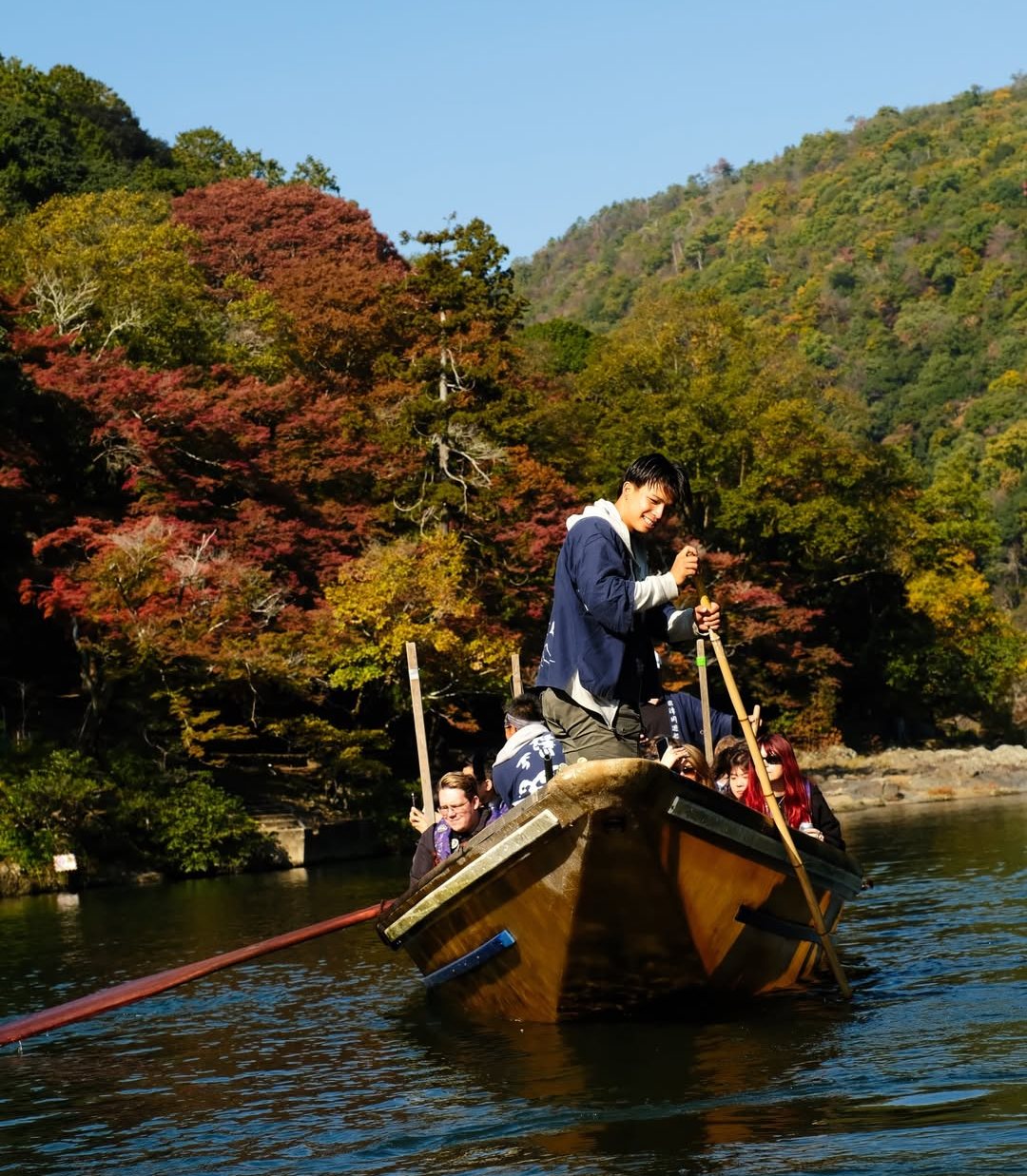
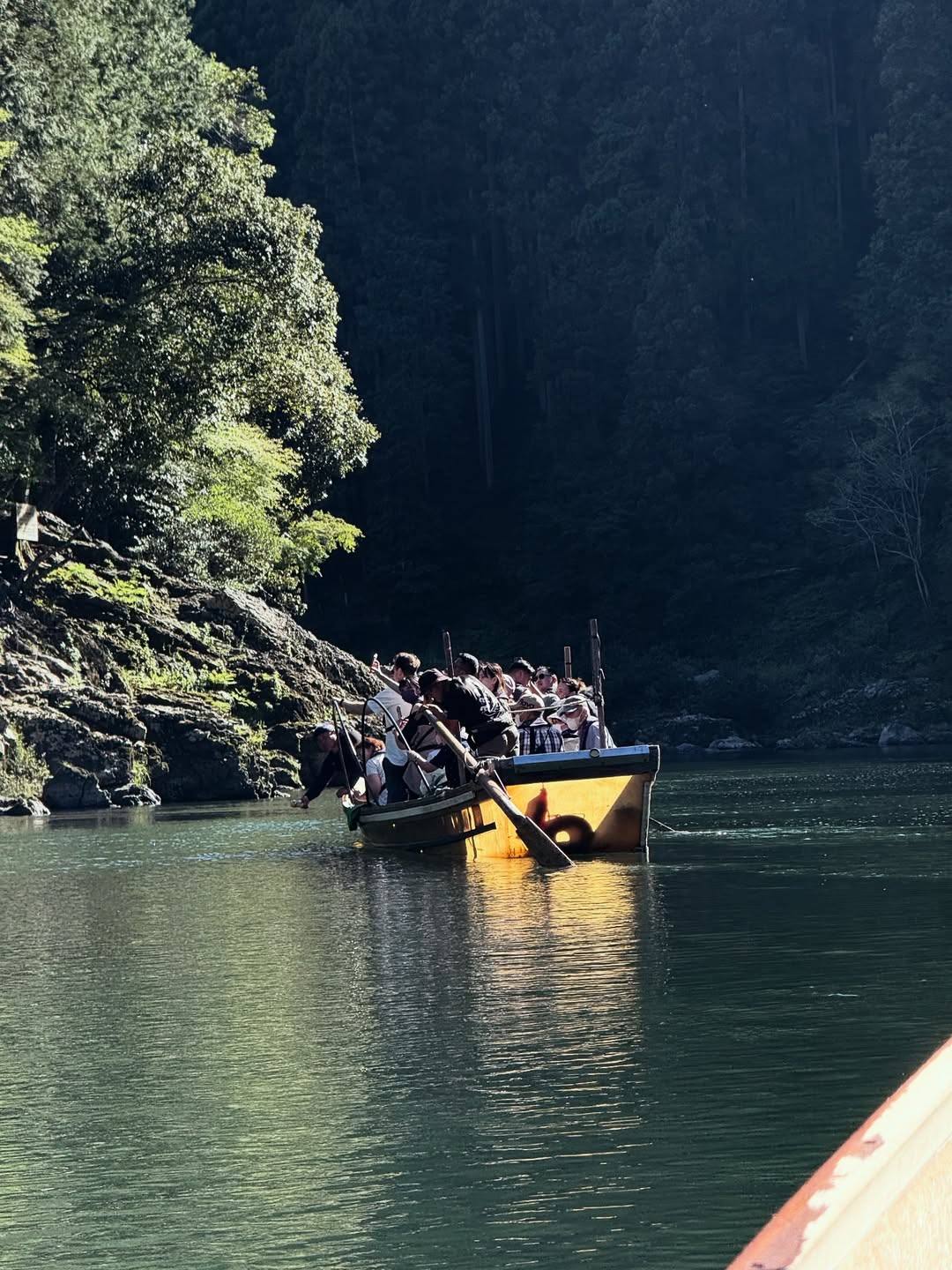
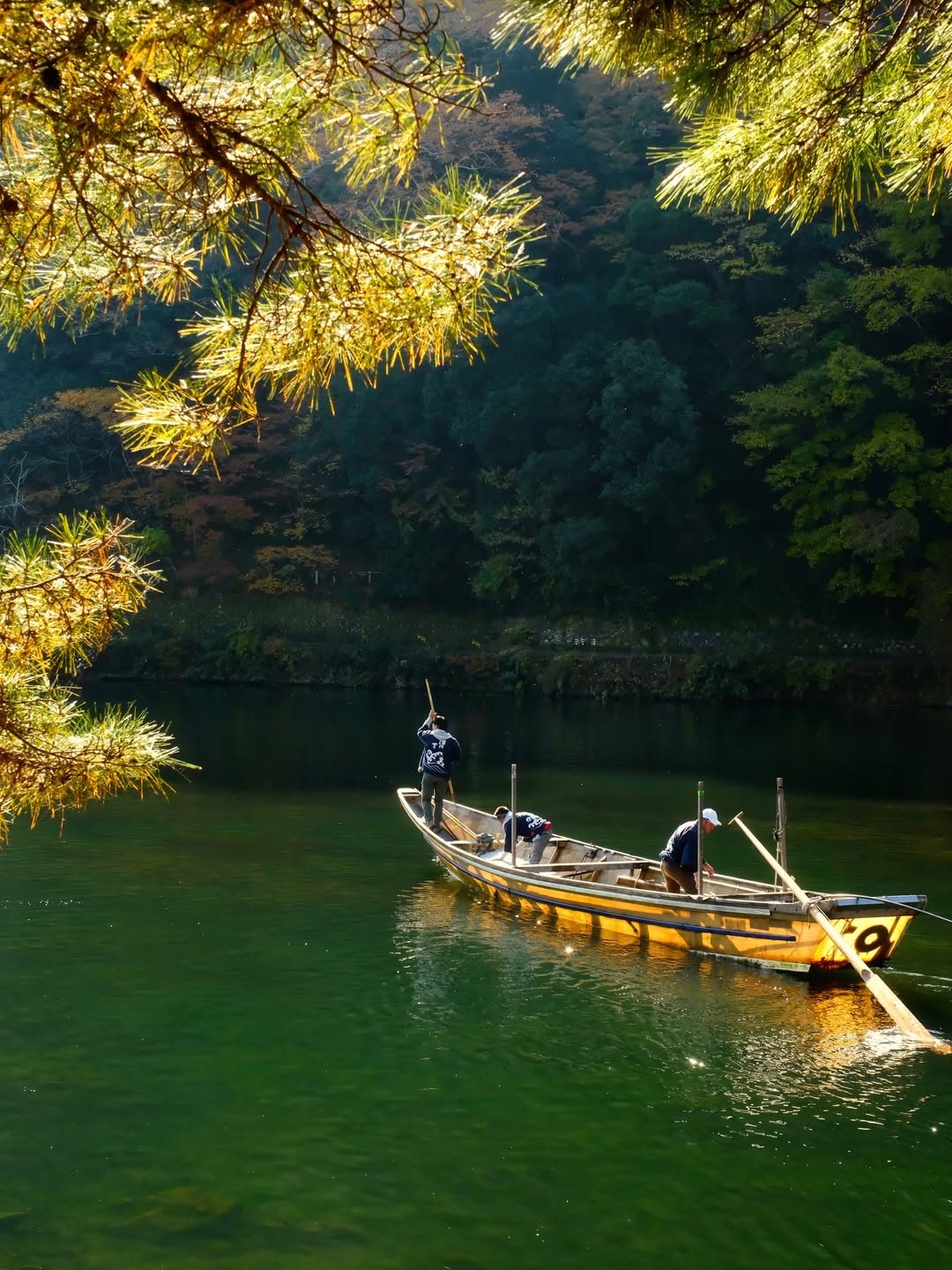
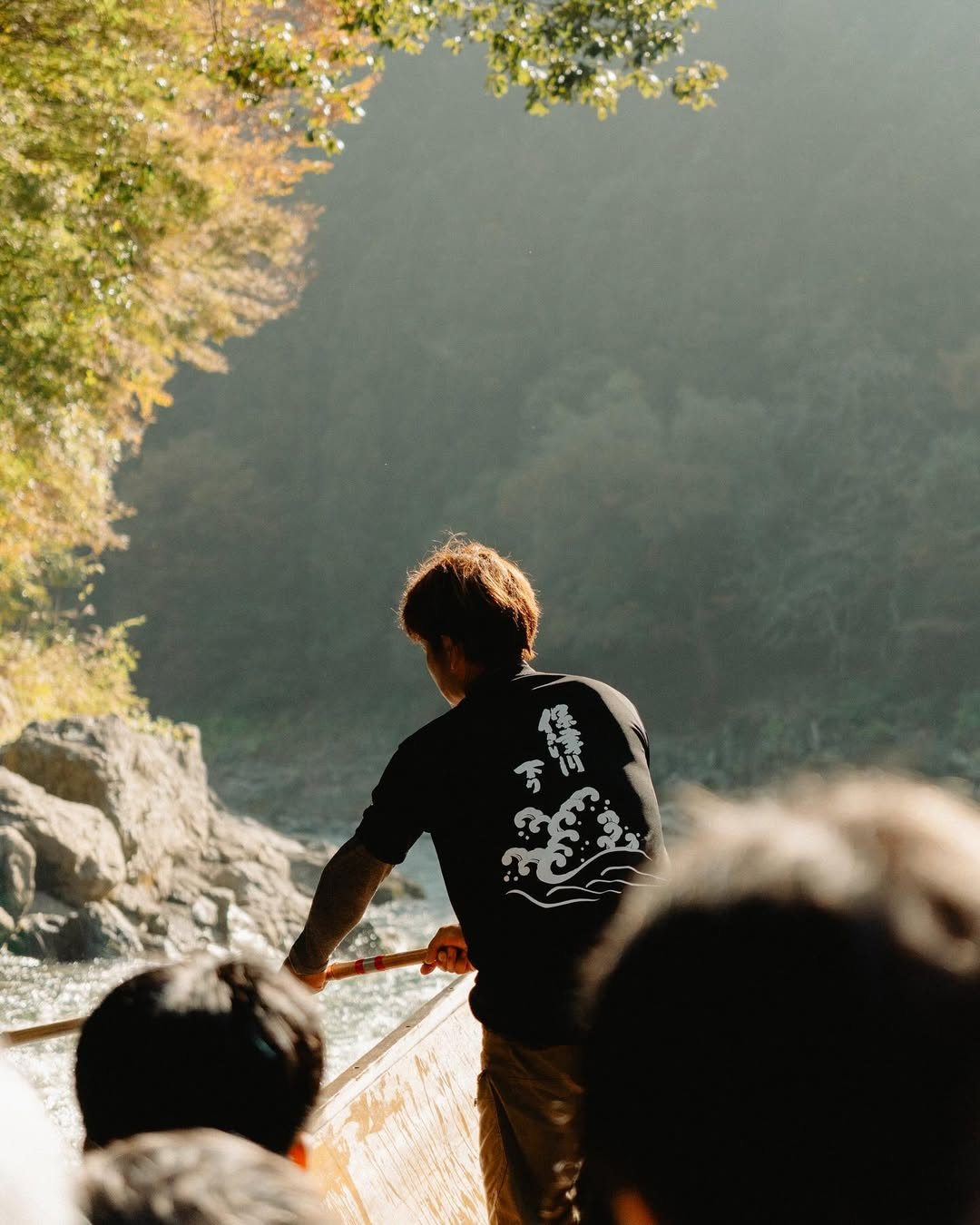
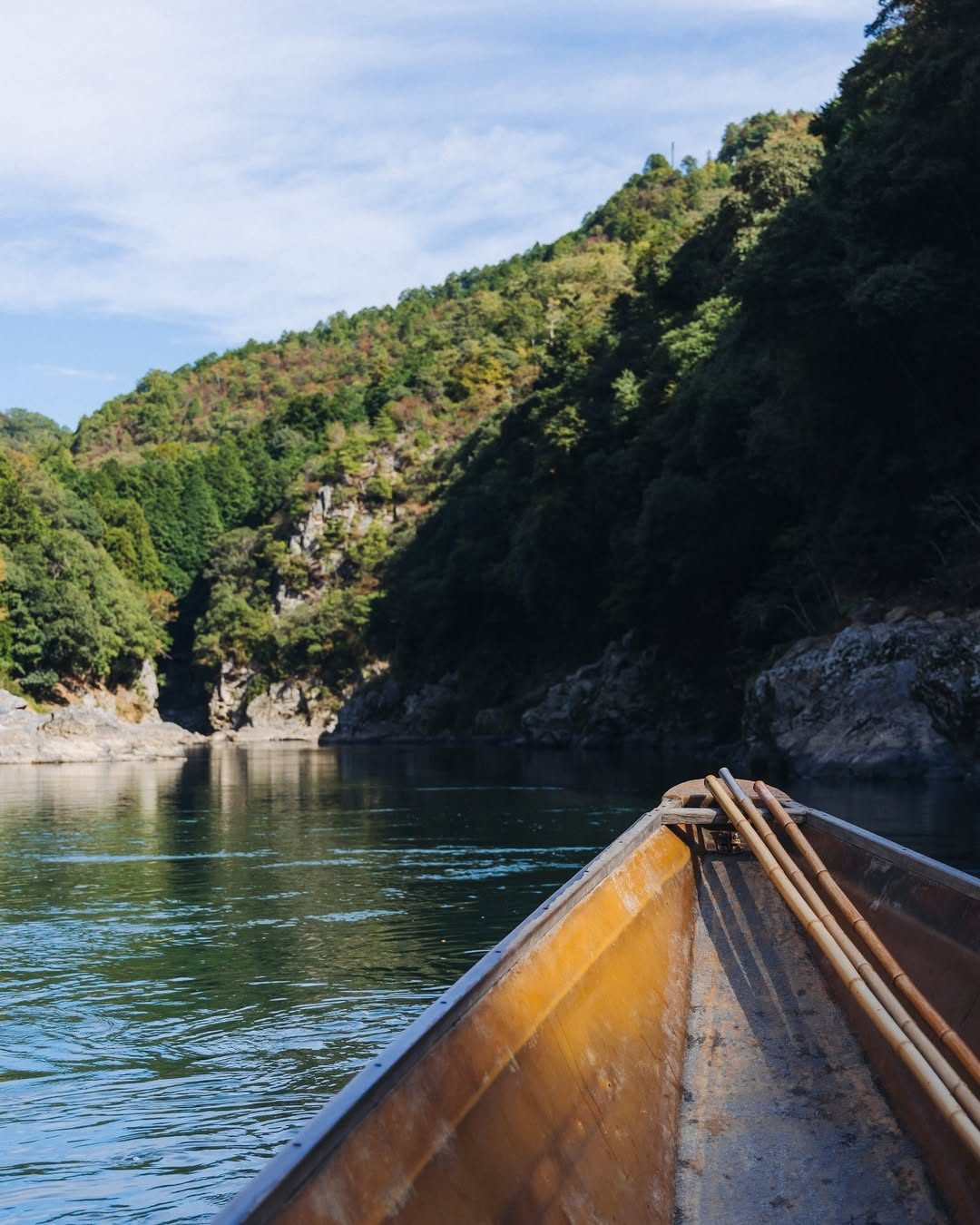
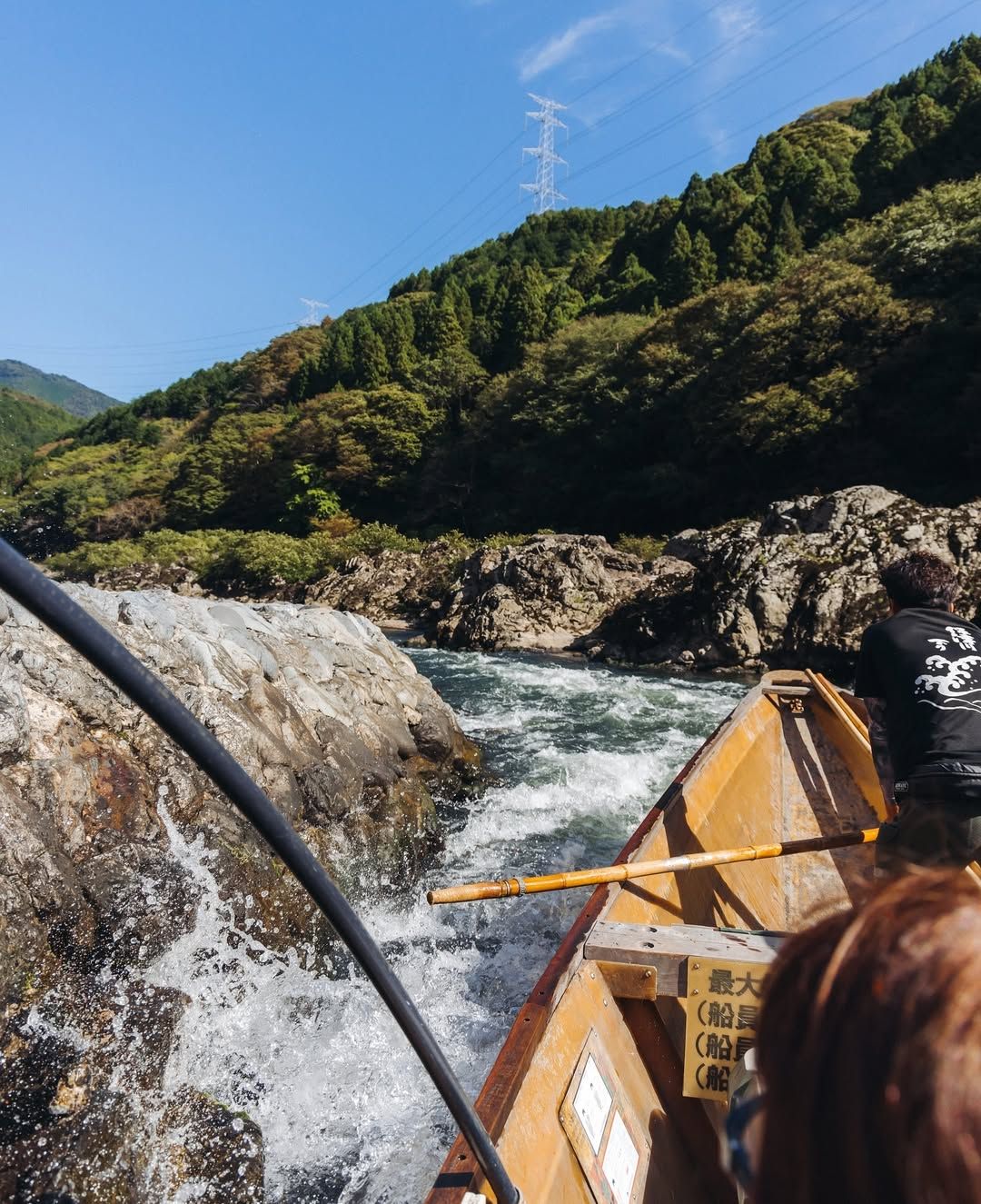
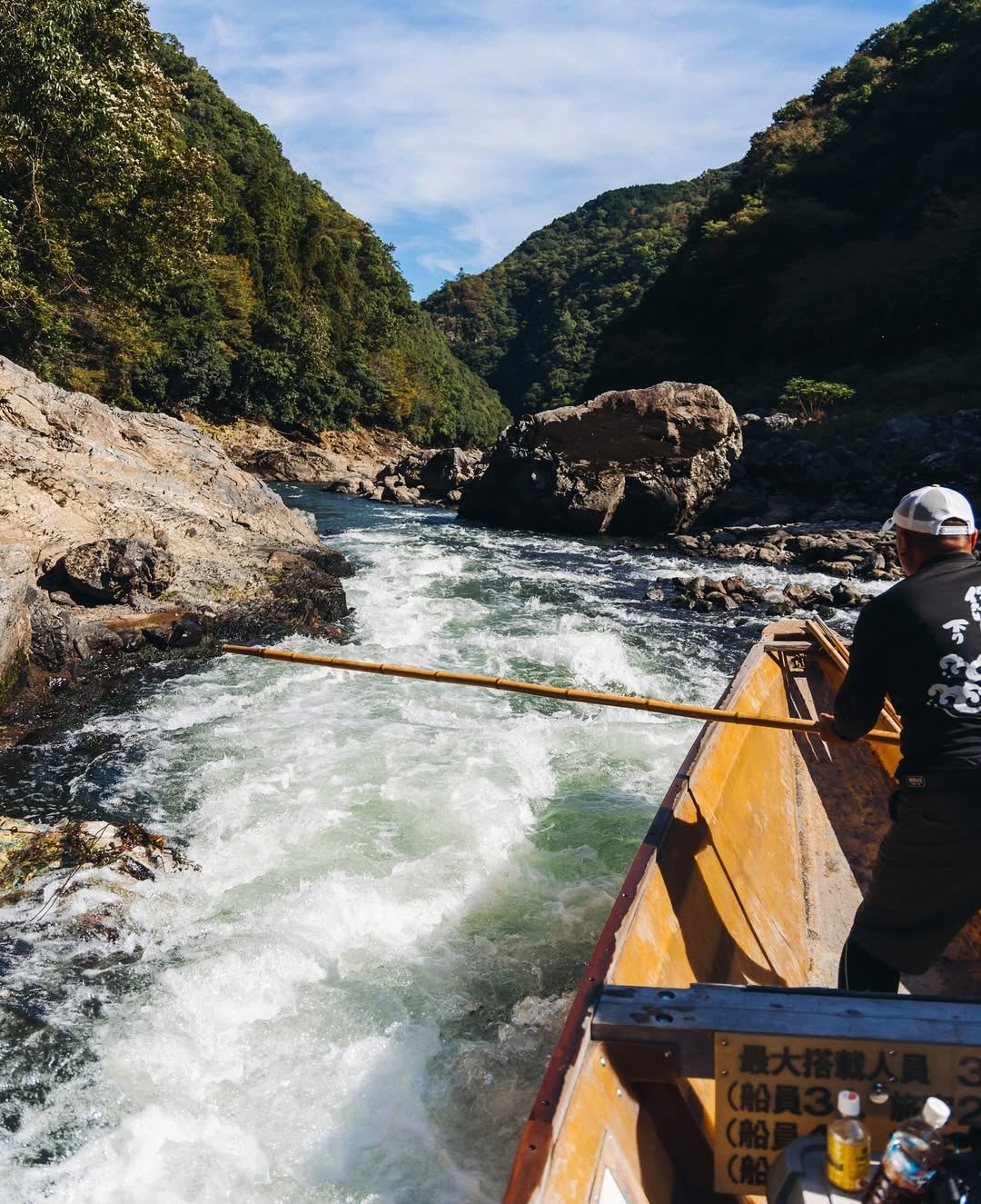
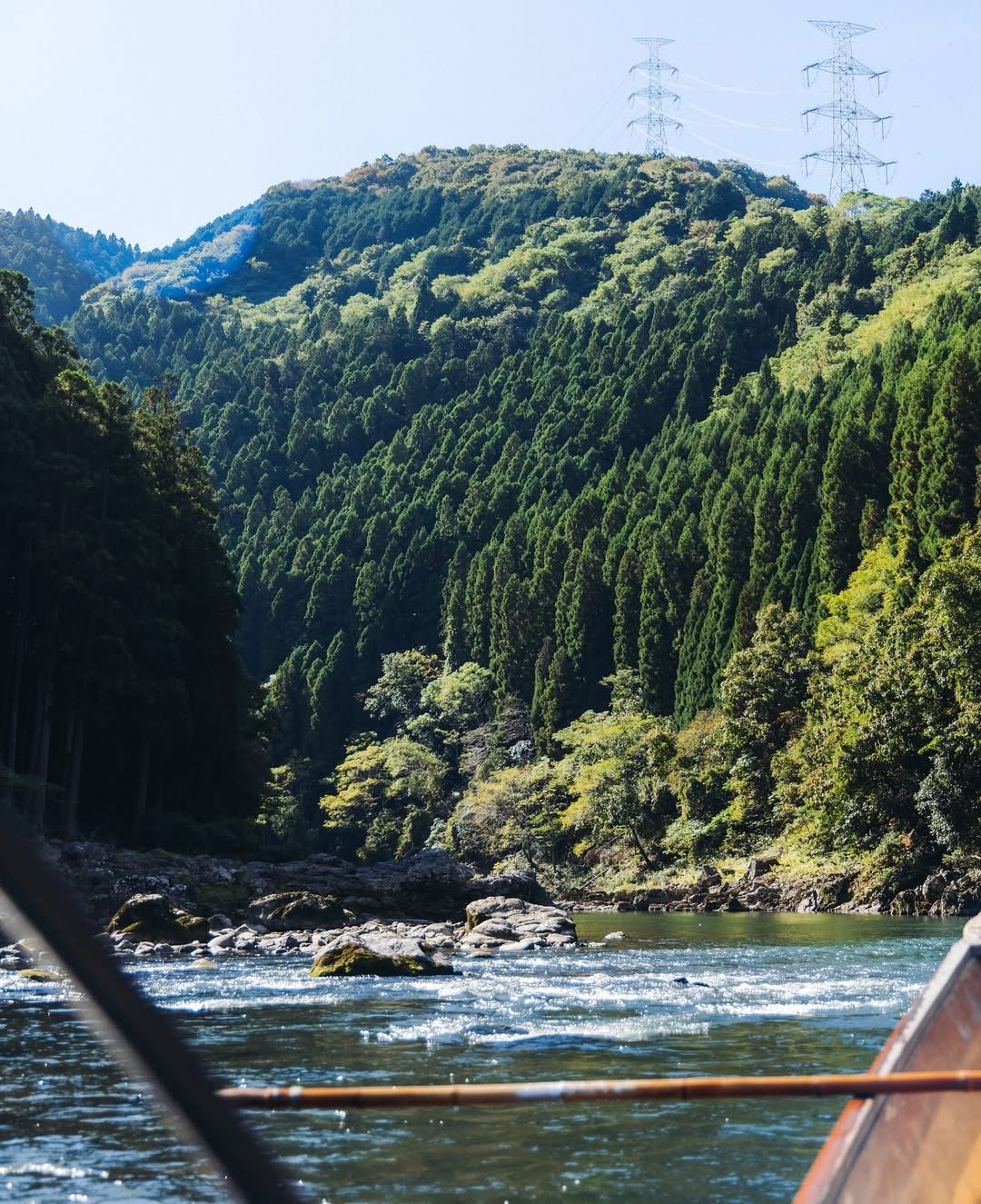
Each flat-bottomed wooden boat is piloted by a three-person crew of sendo boatmen who steer using only bamboo poles, oars, and a rear rudder — the same techniques used for over four centuries. The journey alternates between calm, mirror-still stretches where the gorge walls tower above you and playful sections of gentle rapids that draw cheers from passengers.
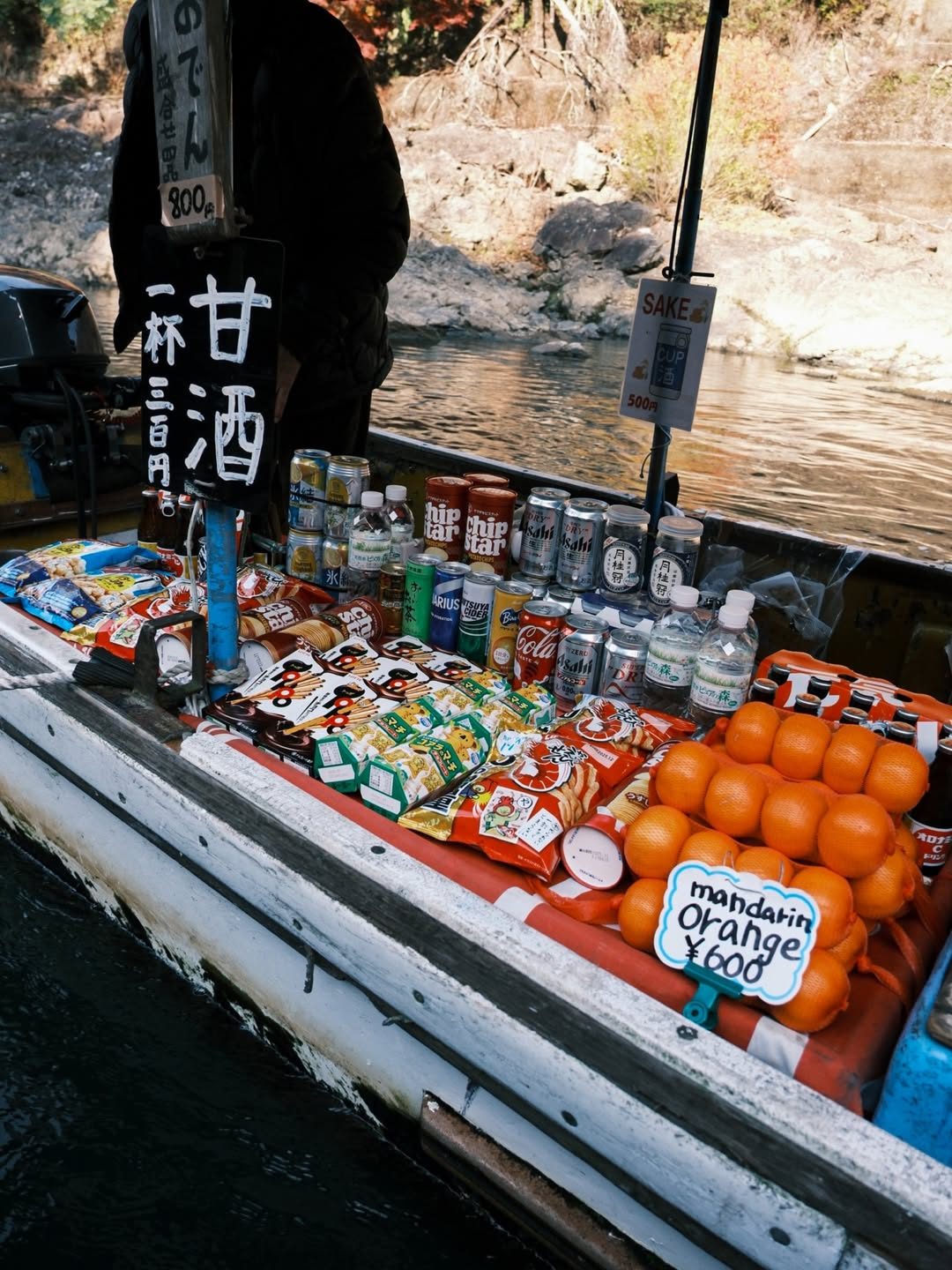
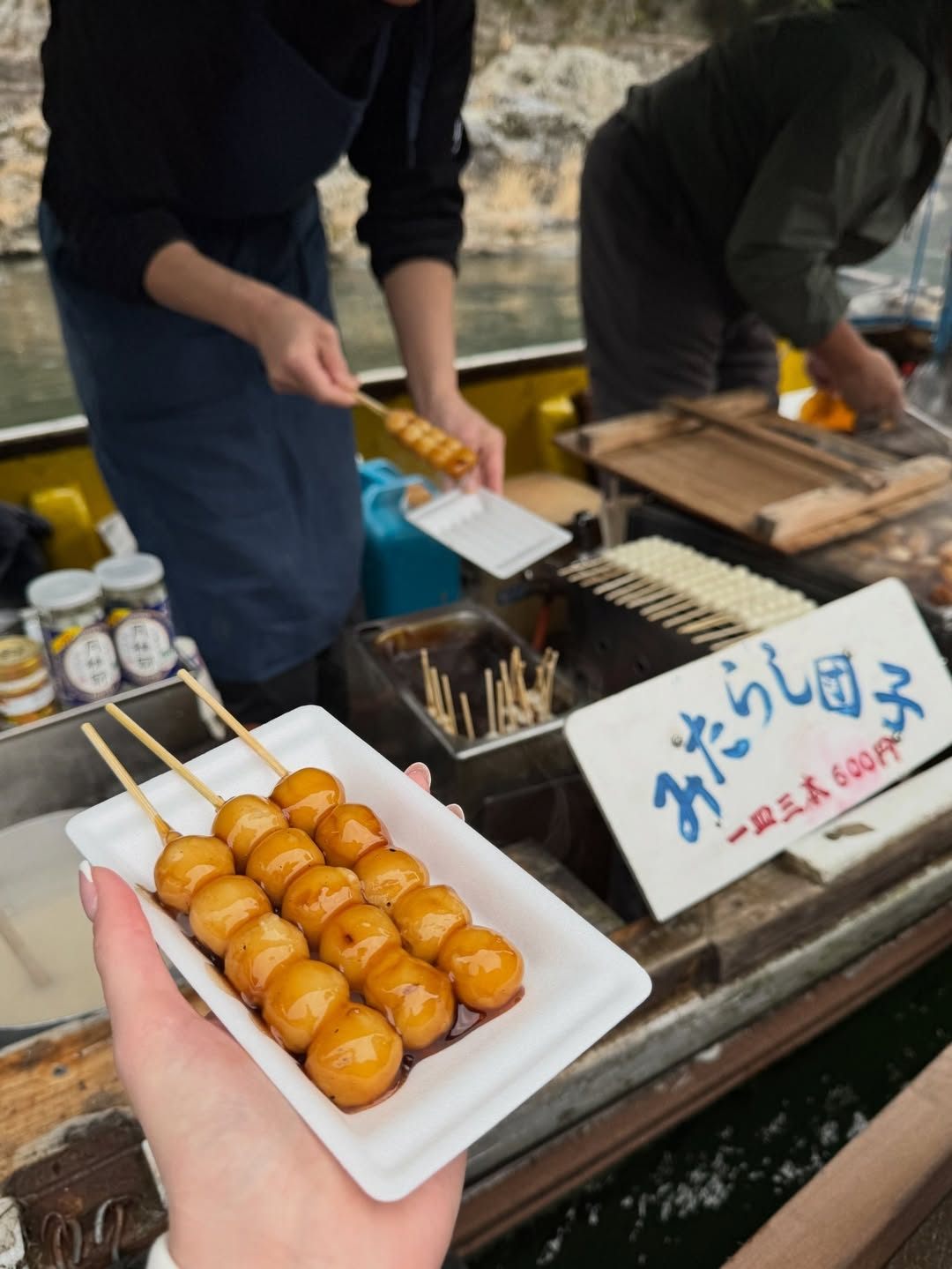
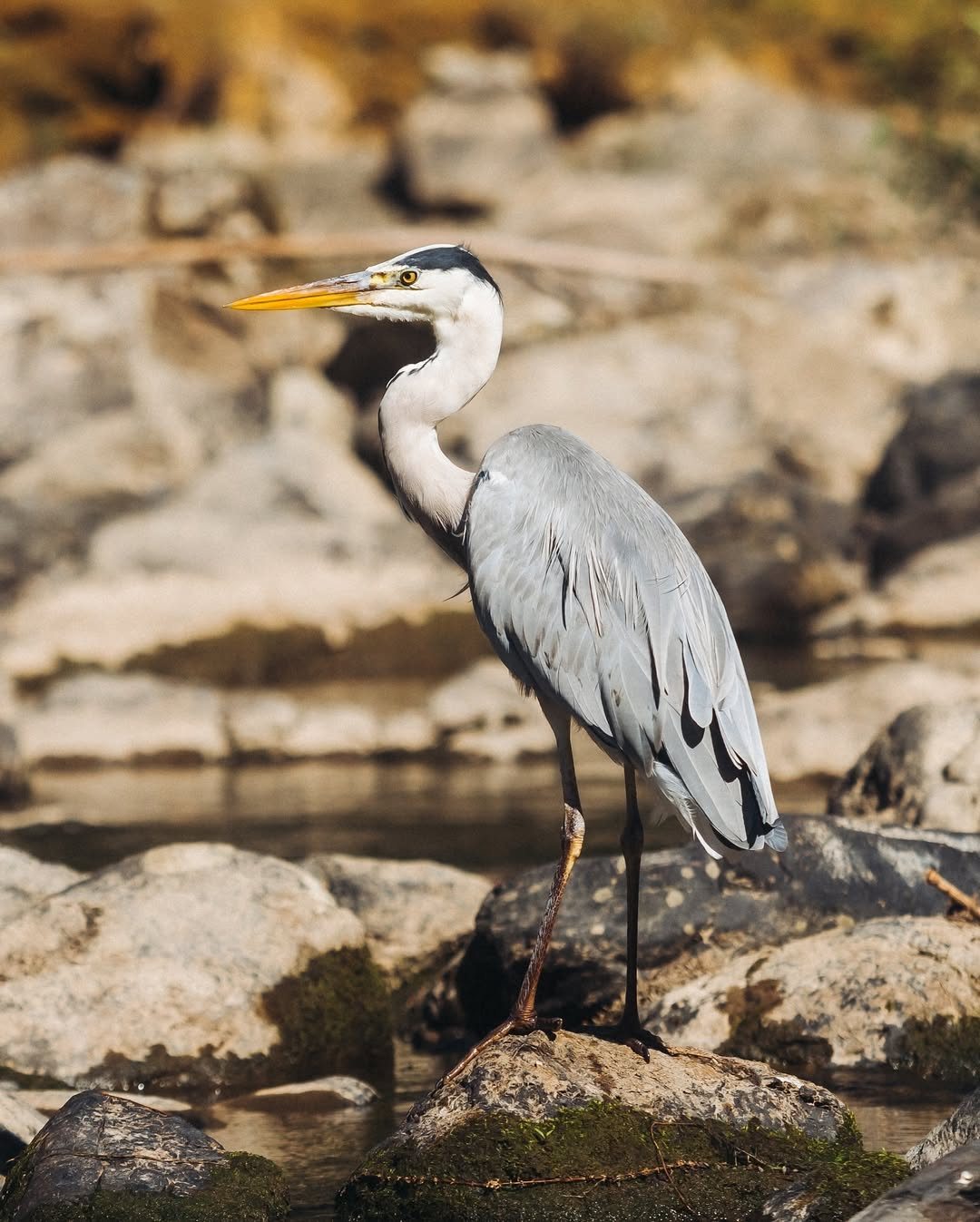
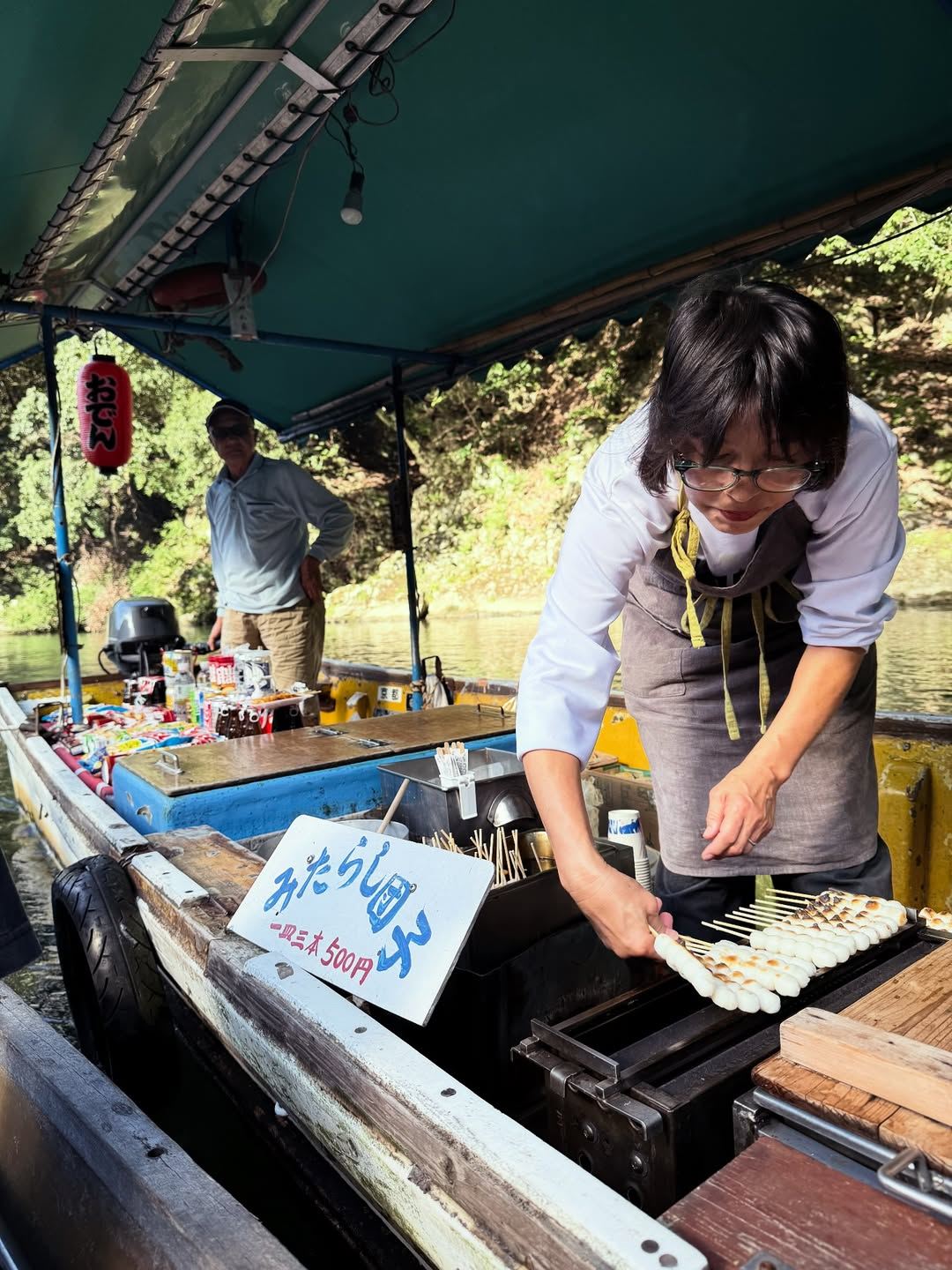
Along the way, the crew shares stories about the river’s history, points out uniquely shaped rock formations, and spots wildlife — from wild monkeys and grey herons to kingfishers darting across the water. Near the end of the ride, a floating food boat pulls alongside selling warm dango, amazake sweet sake, beer, and grilled snacks.
Key Facts
- Route: Kameoka → Arashiyama (one-way downstream)
- Distance: 16 km
- Duration: approximately 2 hours
- Boat capacity: 24 passengers (16 in winter)
- Crew: 3 sendo boatmen per boat
- Season: year-round, with a winter schedule from mid-December to March 9 — dress warmly, there is no heating on board
- Arrives: near Togetsukyo Bridge, Arashiyama
- Language: commentary primarily in Japanese with some English
Hozugawa River Boat Ride Tickets, Prices & How to Book
Tickets start at ¥6,000 per adult and ¥4,500 per child, with the ride running year-round from Kameoka to Arashiyama. During cherry blossom season (late March–mid April) and peak autumn foliage (November), time slots regularly sell out days in advance — even on weekdays. Booking online is the simplest way to lock in your preferred date and time without any surprises when you arrive at the dock.
You’ll receive a confirmed time slot and a voucher to show at the reception desk in Kameoka. Just show up, check in, and you’ll be on the water within about 30 minutes. No printing needed, no queuing at the ticket counter, no risk of sold-out boats. Full refunds are issued if the ride is cancelled due to weather.
Private charter boats are also available for groups of up to 17 people — ideal for families, corporate outings, or special occasions.
Check the tabs below for detailed pricing, departure timetable, booking options, and cancellation policy.
Hozugawa River Boat Ride Reservation Guide
Hozugawa River Boat Ride Prices
Regular Shared Boat (capacity: 24 passengers, 16 in winter)
| Price | |
|---|---|
| Adult | ¥6,000 |
| Child (infant – elementary school students) | ¥4,500 |
| Disability discount (with certificate) | ¥5,400 adult / ¥4,050 child |
| School trip students (under 35 people) | ¥5,400 per person |
| School trip students (35 or more) | ¥5,000 per person |
Group Discounts Groups of 35–99 adults receive 5% off the regular fare. Groups of 100 or more receive 10% off. Children under 80 cm in height are not permitted to board.
Private Charter Boat (capacity: up to 17 passengers)
| Price | |
|---|---|
| Regular season (one boat) | ¥144,000 |
| Peak season (one boat) | ¥162,000 |
For groups larger than 17, an additional ¥6,000 per adult and ¥4,500 per child applies for each extra person, up to a maximum of 20 passengers per boat.
Peak season charter rates apply during the following periods: late April through early May (Golden Week), mid-July through late August (summer holidays), mid-September national holidays, early to mid-October national holidays, and all of November through the first week of December (autumn foliage season). Exact dates shift slightly each year — check the official site for the current year’s peak calendar.
Winter Boat (2nd Monday of December – March 9)
Prices remain the same as the regular season: ¥6,000 per adult and ¥4,500 per child. Capacity stays at 24 passengers but may be reduced to 16 depending on conditions. Private charter during winter is available Monday through Friday only, at ¥144,000 per boat.
Important: the winter boats are not covered by a tent and there are no heating facilities on board. Dress warmly — layers, gloves, hat, and a scarf are recommended.
The ride is closed every year from December 29 through January 4.
Note: the disability discount is only available at the on-site ticket counter (not through online reservations). The official site asks visitors to understand this as it relates to the general pricing structure of the online booking system.
Hozugawa River Boat Ride Timetable & Schedule
Departure times vary by season. On weekends and holidays during the regular season, boats don’t follow a fixed schedule — they depart as soon as all seats are filled, which can mean shorter wait times on busy days.
| Period | Operating Hours | Departures |
|---|---|---|
| Mar 10 – Dec 13 (Weekdays) | 9:00 AM – 3:00 PM | Hourly: 9, 10, 11, 12, 1, 2, 3 |
| Mar 10 – Dec 13 (Weekends & Holidays) | 9:00 AM – 3:00 PM | Continuous — departs when full |
| 2nd Monday of Dec – Mar 9 (Winter) | 10:00 AM – 2:30 PM | 4 departures: 10:00, 11:30, 1:00, 2:30 |
| Dec 29 – Jan 4 | CLOSED | Year-end holiday |
Source: Full 2026 timetable.
Tip: Morning slots (9:00–10:00 AM) are the best pick — fewer crowds, better light for photos, and you’ll have the rest of the day to explore Arashiyama after you arrive.
How to Book Hozugawa River Boat Ride
Online reservations can be made through the official website, or official partners like Klook, for groups of 9 or fewer, up until the day before your preferred date. In both cases, you’ll receive a QR code or e-ticket to show at the reception desk on arrival. Expect to wait approximately 30 minutes after your time slot before the boat actually departs.
Same-day walk-in tickets are also available on a first-come, first-served basis at two locations: the boarding dock in Kameoka and the Torokko Saga Station ticket counter. On busy days, boats may depart ahead of the posted schedule once all seats are filled — so arrive early if you’re buying on the day.
During peak season (late March–mid April and all of November), time slots regularly sell out. Book in advance if you’re visiting during these windows. Outside of peak periods, walk-ins are usually fine, especially on weekday mornings.
Cancellation & Weather Policy
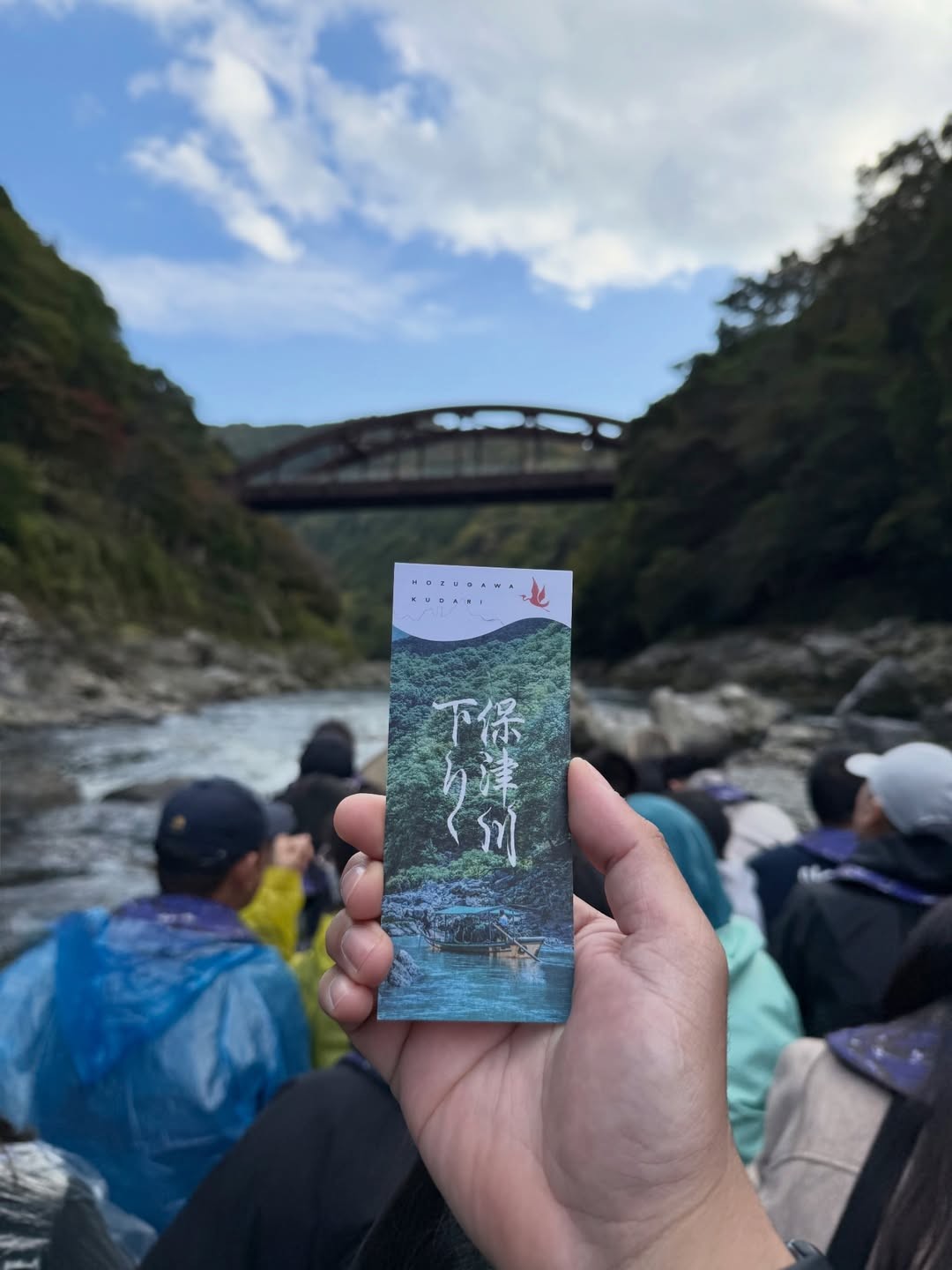
The ride operates in light rain — a tent cover is placed over the boats. However, service will be suspended during severe rainstorms, typhoons, or when the river’s water level is too high or too low. In case of a weather cancellation, full refunds are issued. The official website posts daily operation status each morning — always check before making the trip to Kameoka.
If you booked your tickets online and need to cancel on your end, the following policy applies:
| Cancellation Time | Service Fee |
|---|---|
| More than 1 day before your time slot (before 23:59) | Free cancellation |
| Less than 1 day before, or no-show | No refund |
Rules & Important Information
Before you head to Kameoka, here’s what you need to know. These rules are set by the Hozugawa River Boat Ride operator for the safety and comfort of all passengers.
Safety
- Life jackets are mandatory for all passengers — no exceptions. Jackets are provided in adult and children’s sizes. Passengers who refuse or are unable to wear one will be denied boarding.
- Standing up in the boat is not permitted during the ride, especially through rapids and narrow sections.
- Umbrellas (including sun umbrellas) are not allowed on the boat as they may inconvenience other passengers. On sunny days, a sunshade canopy is used. Bring a hat and sunscreen instead.
Boarding Requirements
- Children under 80 cm in height are not permitted to board, regardless of age — even if carried in an adult’s arms. This is due to life jacket safety regulations.
- There is no minimum age restriction as long as the child meets the 80 cm height requirement.
- Pregnant women may board at their own risk. Boarding is not recommended before the stable period (around 5–6 months). The operator does not refuse boarding but cannot take responsibility for safety-related outcomes.
- Passengers with physical disabilities (Type 1) and children under 12 with Type 2 intellectual disabilities must be accompanied by one attendant per person. Both the passenger and attendant receive a 10% fare discount.
- Wheelchair users may board but must be accompanied, even if they can transfer to a seat independently. Foldable wheelchairs are stored at the rear of the boat. Boarding while remaining in the wheelchair is not permitted. Note that wheelchairs may get wet from splashes.
- Guide dogs are welcome on board.
- Pets are allowed on your lap, provided they are kept in a cage or bag and secured so they cannot jump out or interfere with the boat’s operation.
Strollers & Luggage
- Strollers must be folded and stored at the rear of the boat. If you’re traveling with multiple strollers, contact the operator in advance.
- Small bags are fine. Large luggage is not recommended — use coin lockers at JR Kameoka Station before heading to the dock.
Food, Drinks & Restrooms
- Food and drinks are allowed on board. The ride lasts about 2 hours, so bringing water and snacks is a good idea. A floating food boat also appears near the end of the ride selling dango, amazake, beer, and other snacks (cash only).
- There are no restrooms on the boat. Use the facilities in the waiting area before boarding.
Operations & Closures
- Duration is approximately 120 minutes, though this varies with water level — as short as 60 minutes during high water, up to 110 minutes during low water.
- The ride operates in rain with a tent canopy over the boats. It does not operate during severe rainstorms, typhoons, strong winds, or abnormal water levels.
- The decision to operate is made on the day based on conditions. Always check the “Operation Status” on the official website before traveling to Kameoka.
- Annual closure: December 29 – January 4.
- Scheduled safety inspection closures for 2026: Sunday, February 1 / Wednesday, February 4 / Wednesday, September 2.
Payments
- Credit cards are accepted at the ticket office.
- The floating food boat at the end of the ride is cash only — bring coins.

Sarah M.
Australia, Oct 2025

Thomas K.
Germany, Apr 2025
Ji-young P.
South Korea, Dec 2025
David L.
United Kingdom, Mar 2024
Marco R
Italy, Sep 2025
Yuki
Japan, Nov 2025
The Route: What You’ll See Along the Way
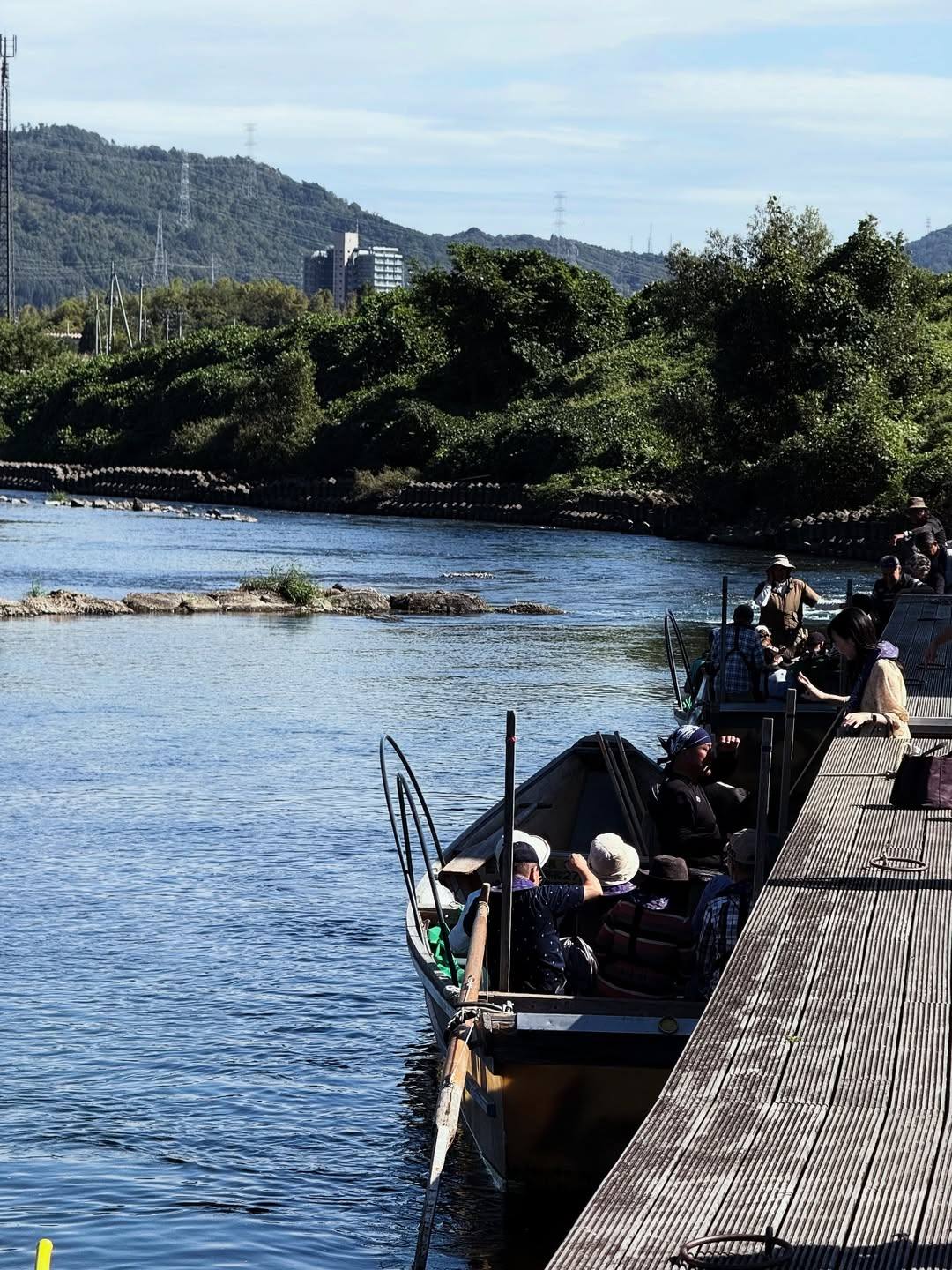
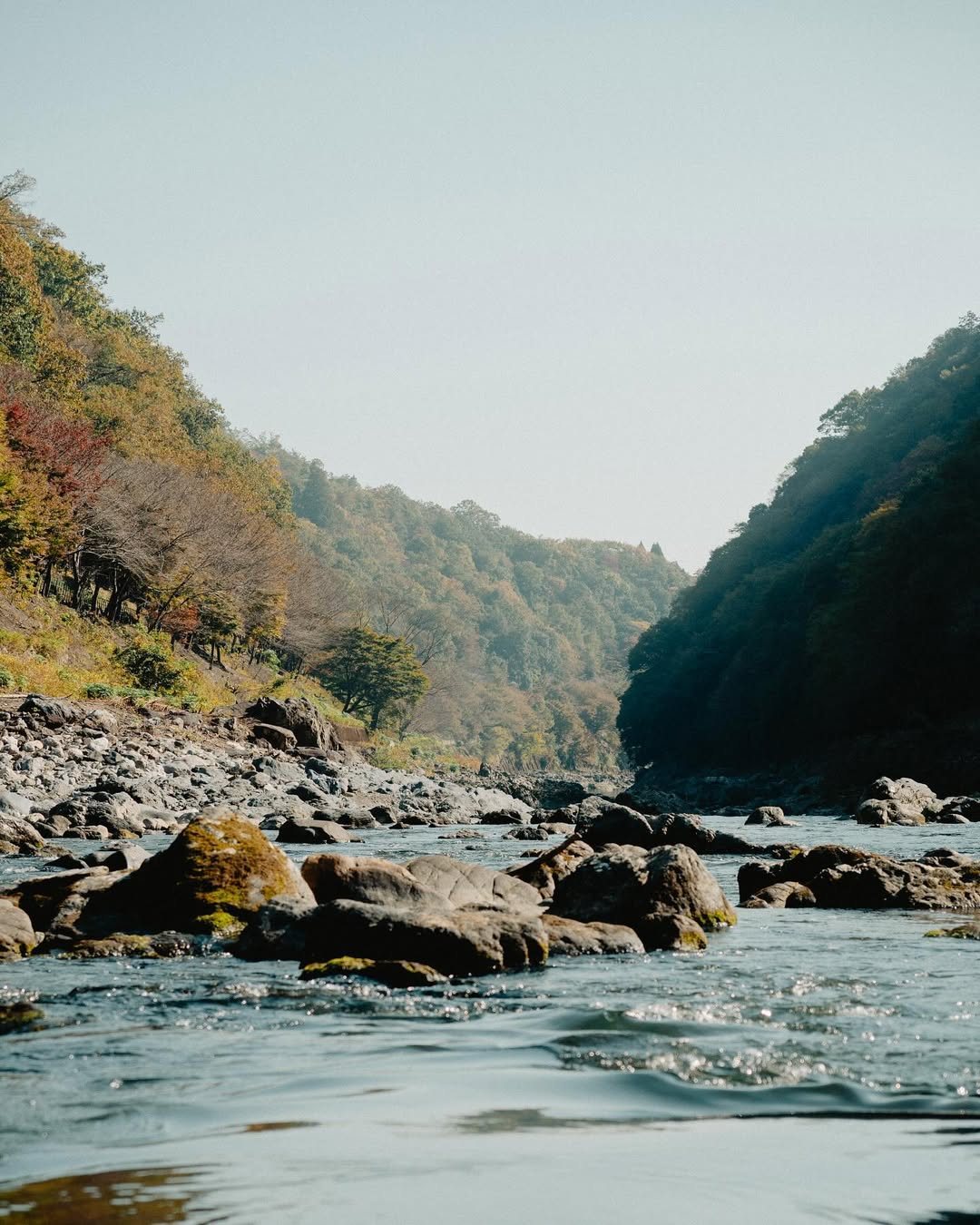
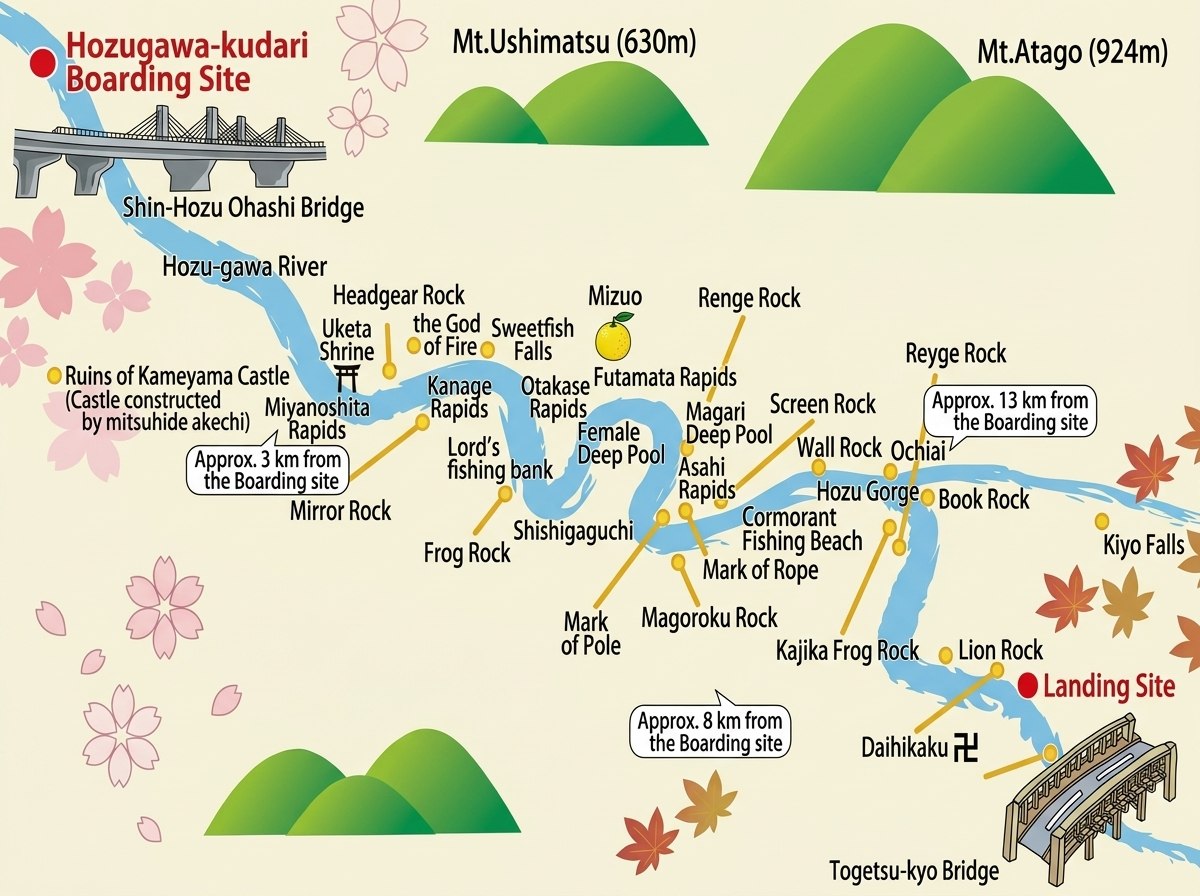
The ride begins at the boarding dock near Shin-Hozu Ohashi Bridge in the Kameoka Valley, where the river is wide and the current is gentle. The boatmen introduce themselves, explain their roles, and set off downstream. For the first stretch, the pace is relaxed — the gorge walls are still low, the water is calm, and there’s time to settle in and take in the surroundings.
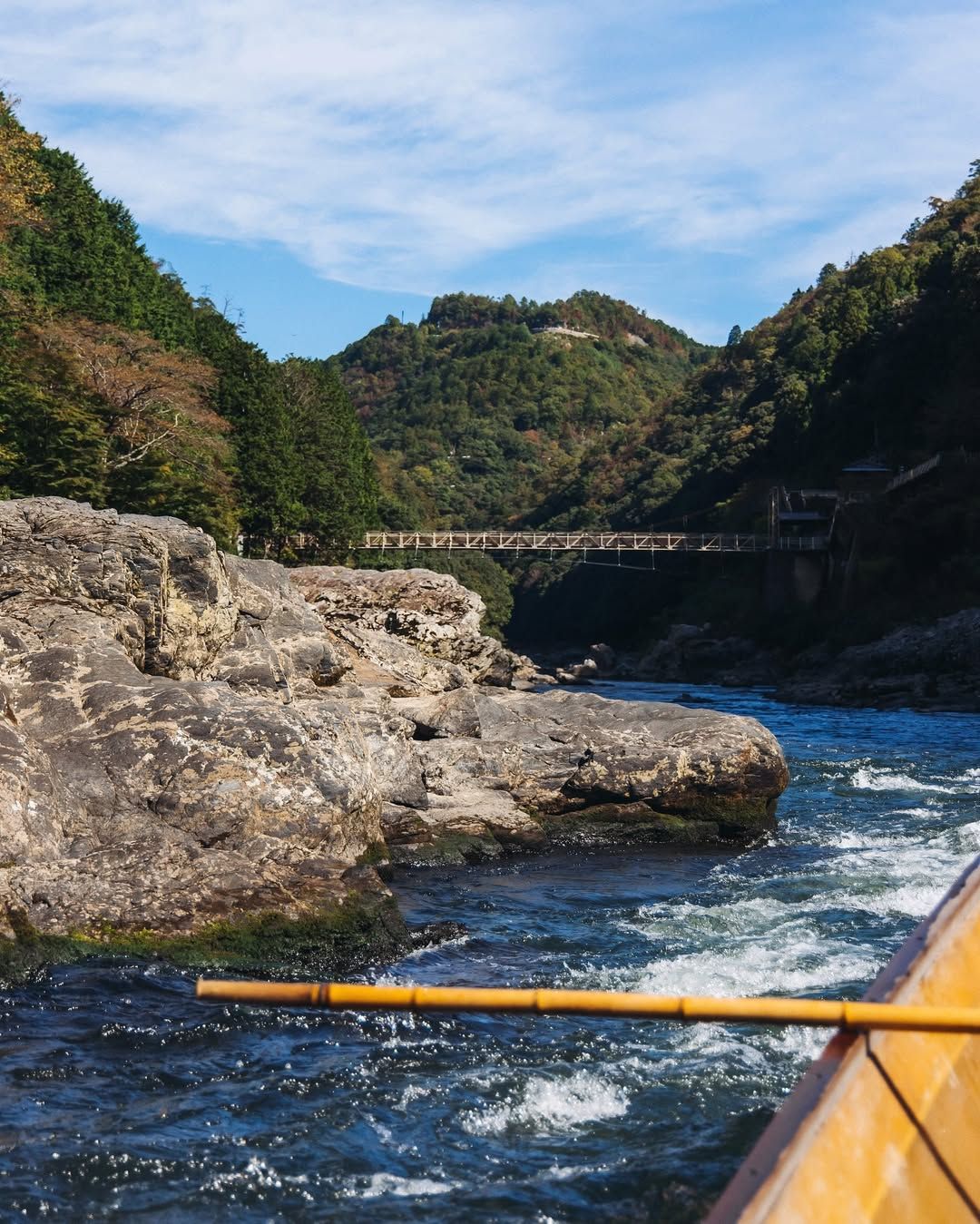
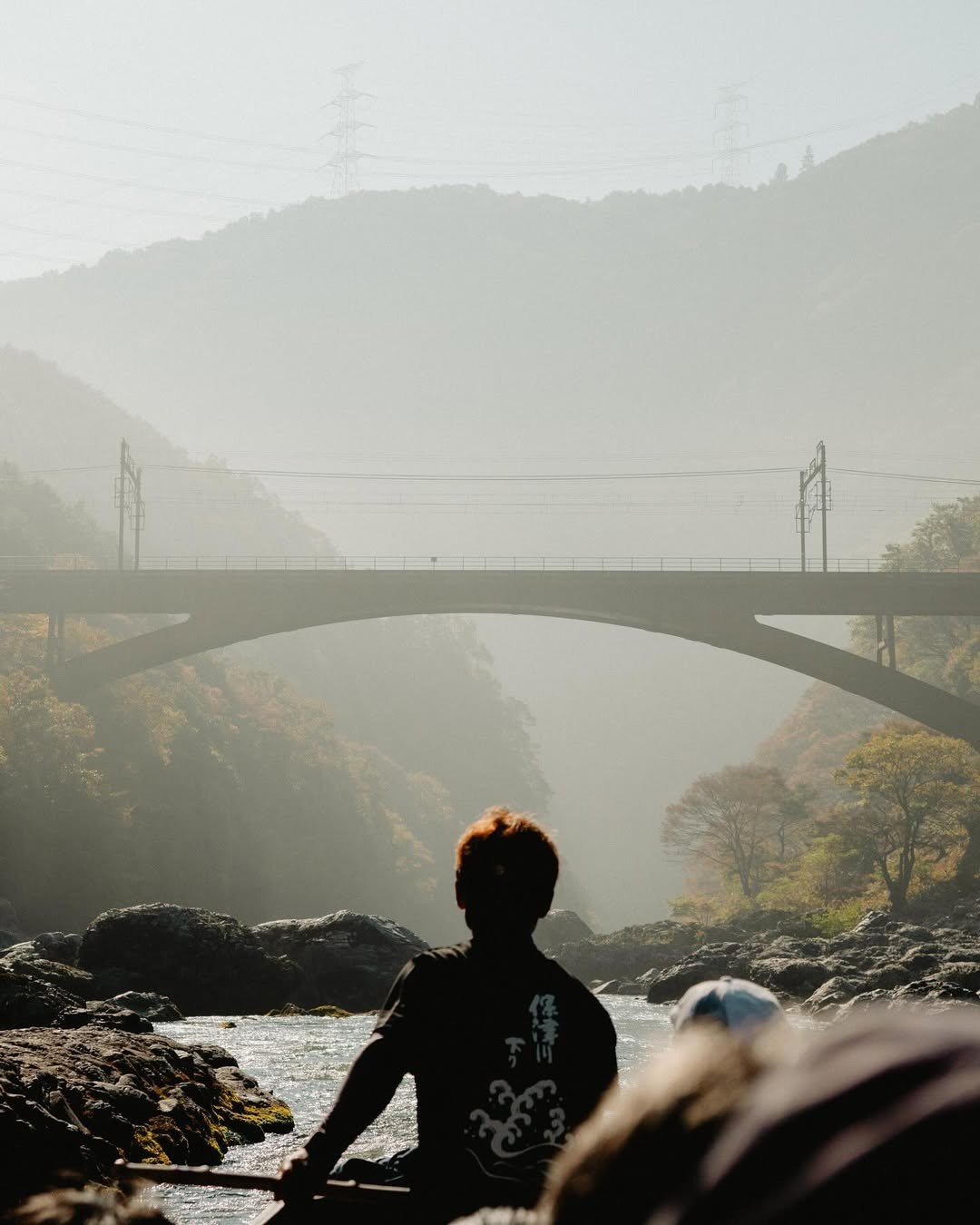
About 20 minutes in, the river narrows and you hit your first set of rapids. It’s not whitewater — think a fun, splashy bump that gets everyone gripping the sides and laughing. The boatmen always play it up, warning you with dramatic timing right before the water picks up. From here, the ride alternates between these lively sections and long, peaceful stretches where the only sounds are birdsong and bamboo poles tapping against rock.
Throughout the journey, the crew will point out landmarks, rock formations, and wildlife along the banks. They know every boulder by name, and guessing what the rocks look like is part of the entertainment.
Notable Sights Along the 16 km Route
- Eboshi-iwa — a distinctive rock formation named after the tall ceremonial headgear worn during the Heian period. It’s one of the most recognizable landmarks on the route and the boatmen always make a point of stopping commentary to let you take it in.
- Koayu-no-taki (Sweetfish Falls) — a small but striking two-metre waterfall that tumbles into the river from the gorge wall. Named after the sweetfish (ayu) that gather at its base.
- Tono no Ryoba (Lord’s Fishing Bank) — a quiet stretch of riverbank said to have been the favourite fishing spot of the feudal lords of Tanba-Kameyama. You can picture it — the water is slow and deep here.
- Kajika-iwa (Frog Rock) — named for the kajika frogs that inhabit the area. Listen closely during warmer months and you might hear them.
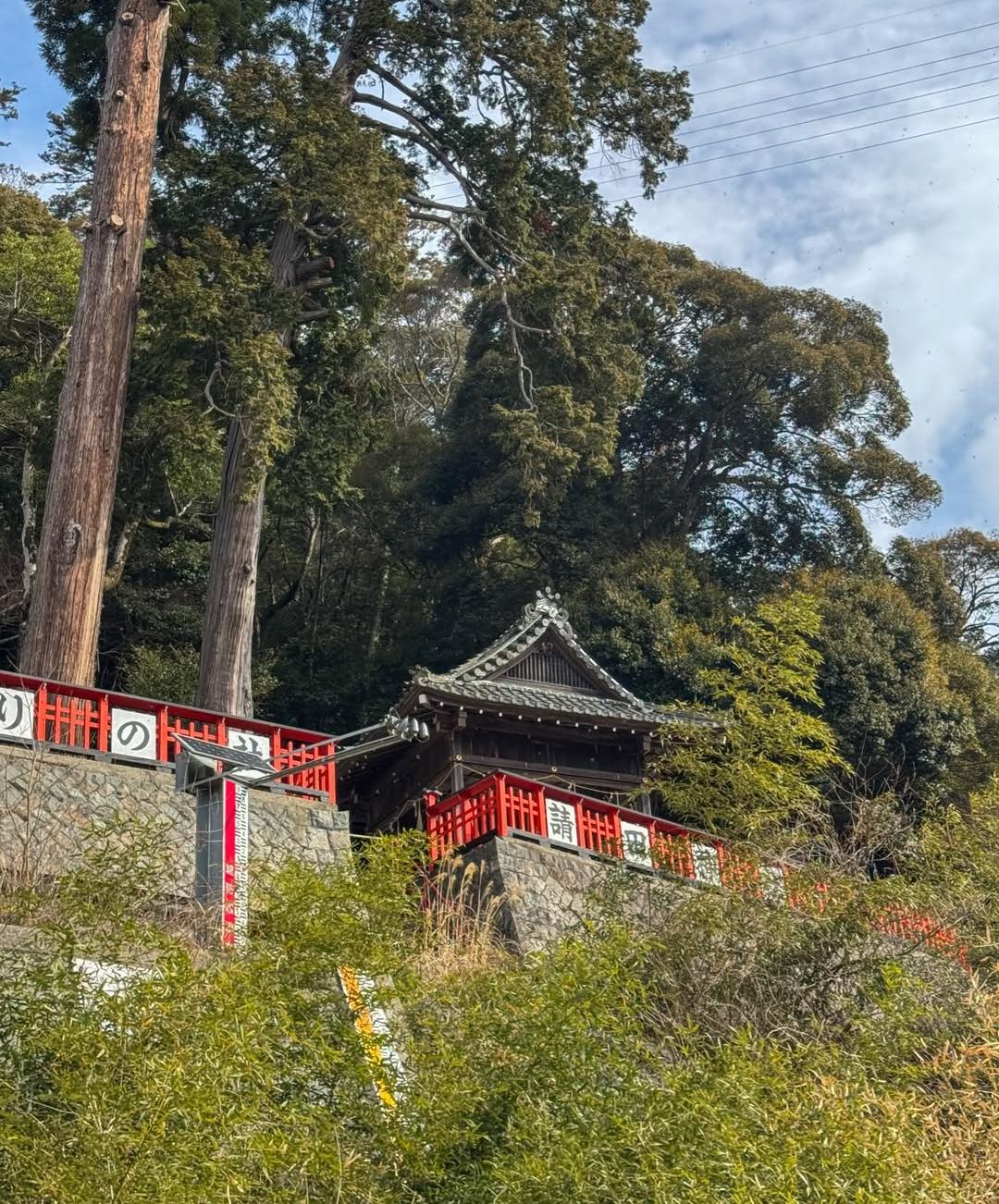
- Daihikaku Senkō-ji Temple — a Buddhist temple perched on the hilltop above the gorge. It was relocated to this spot in 1614 to make way for the canal construction that opened the river to boat traffic.
- Tsuna-michi Towpath Remnants — if you look carefully at the rocky riverbanks, you’ll spot old stone pathways and pole marks carved into the rock. These are traces of the tsuna-michi — the paths boatmen used to haul their vessels back upstream with hemp ropes, a practice that continued all the way until 1949.
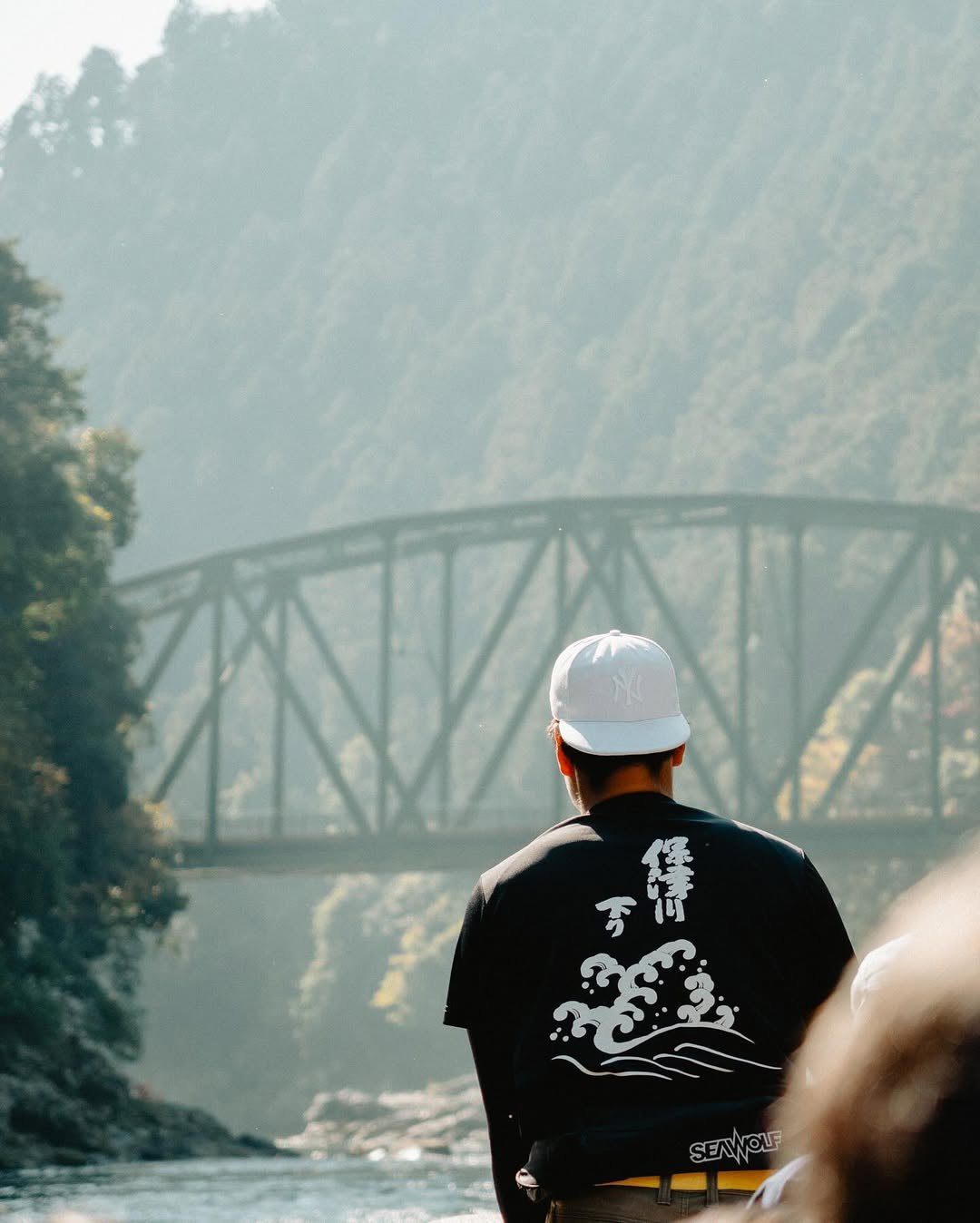
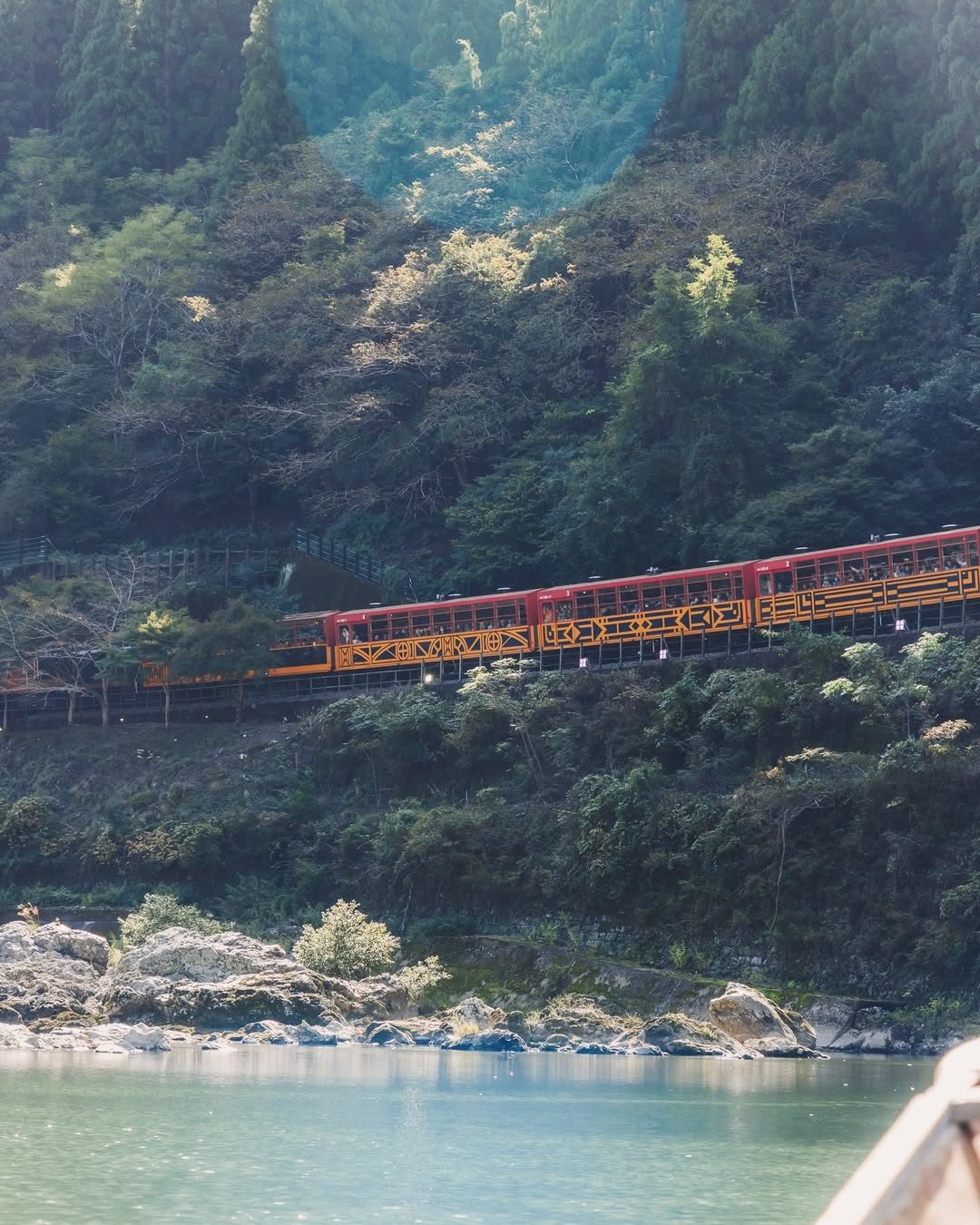
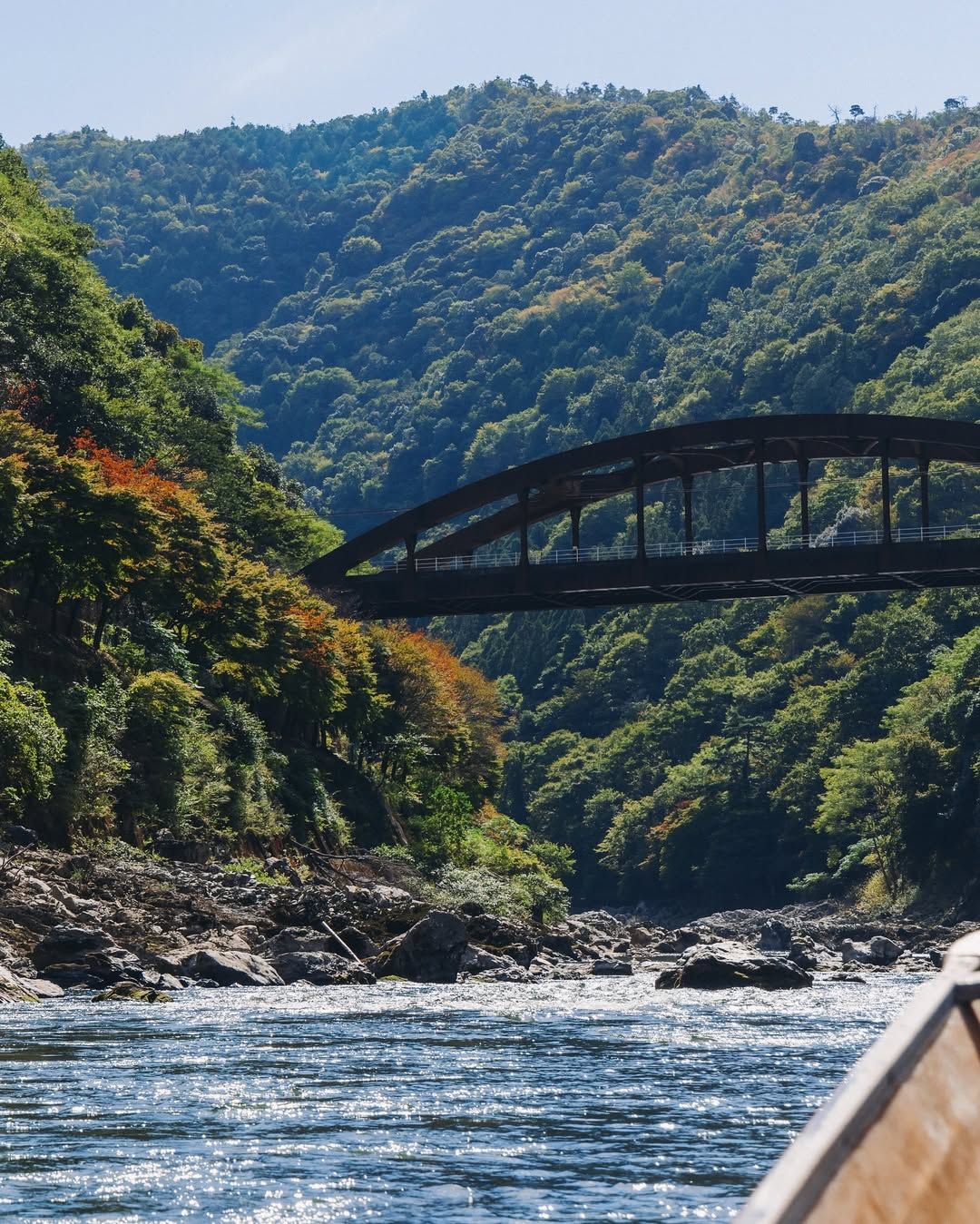
- Sagano Romantic Train Crossings — at several points the Sagano Scenic Railway line runs along the gorge above the river. If a train passes while you’re below, expect a mutual wave exchange between train passengers and boat riders — it’s become a tradition.
- Wildlife — depending on the season and time of day, you may spot wild monkeys on the banks, grey herons standing still in the shallows, kingfishers darting across the water, cormorants, ducks, and even turtles sunbathing on rocks. The boatmen are excellent at spotting them before passengers do.
- The Food Boat — as you approach Arashiyama and the ride nears its end, a small motorized boat pulls up alongside yours. This floating vendor sells mitarashi dango, pickled cucumber, grilled snacks, amazake (sweet sake), beer, and soft drinks. Have coins ready — it’s cash only and part of the fun.
- Togetsukyo Bridge & Arrival — the journey ends at the landing point just upstream from the famous Togetsukyo Bridge in Arashiyama. From here, the bamboo grove, Tenryuji Temple, and the rest of Arashiyama are all within walking distance.
When Is the Best Time for the Hozugawa River Cruise?
The boat ride operates year-round, and each season offers something genuinely different. Spring and autumn are the most popular — and for good reason — but they’re also the busiest. If you’re flexible with dates, mid-week mornings tend to have shorter wait times regardless of season. During peak periods (late March through mid-April and all of November), time slots can sell out days in advance, so booking ahead is strongly recommended. The official website posts daily operation status each morning — always check before heading to Kameoka, especially after heavy rain or during typhoon season, as the ride may be suspended when water levels are too high or too low.
Spring (Late March – May)
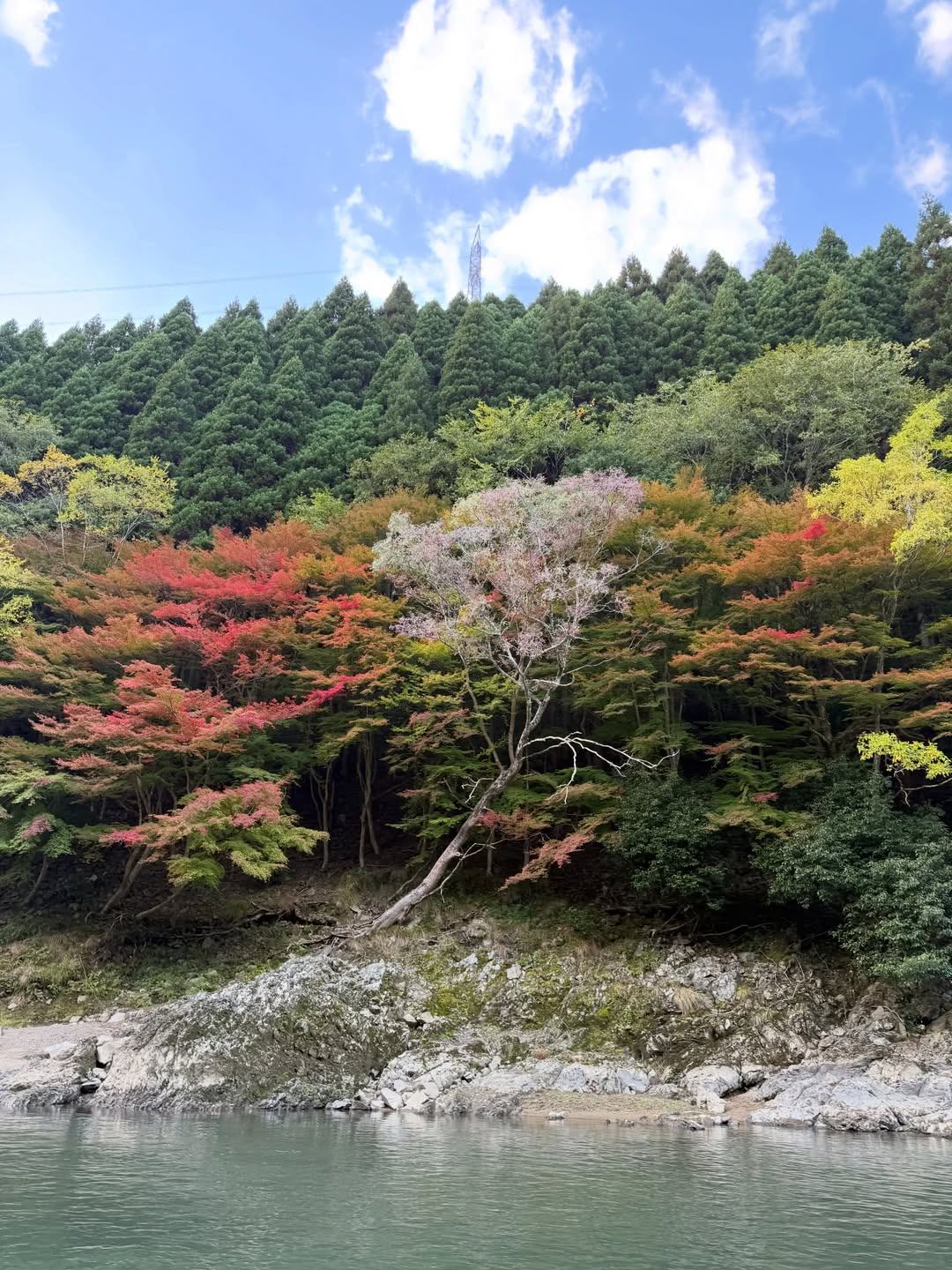
Cherry blossoms line the gorge from late March through early April, creating one of the most photographed stretches of the entire ride. Temperatures sit between 10°C and 20°C — comfortable on the water but bring a light jacket for the breeze. This is peak season alongside autumn, so advance booking is essential. By May the blossoms are gone, replaced by fresh green foliage and blooming azaleas — still beautiful, with noticeably thinner crowds.
Summer (June – September)
June brings the rainy season, and higher water levels mean faster currents and more exciting rapids — the ride can finish in closer to 90 minutes. July and August are hot (30°C+), but the river breeze and tree cover keep things more bearable than central Kyoto. The gorge is at its greenest, and the canopy provides natural shade for much of the route. Service may pause during heavy rainfall or after typhoons — check the official website on the morning of your visit. Crowds are moderate compared to spring and autumn.
Autumn (Late October – Early December)
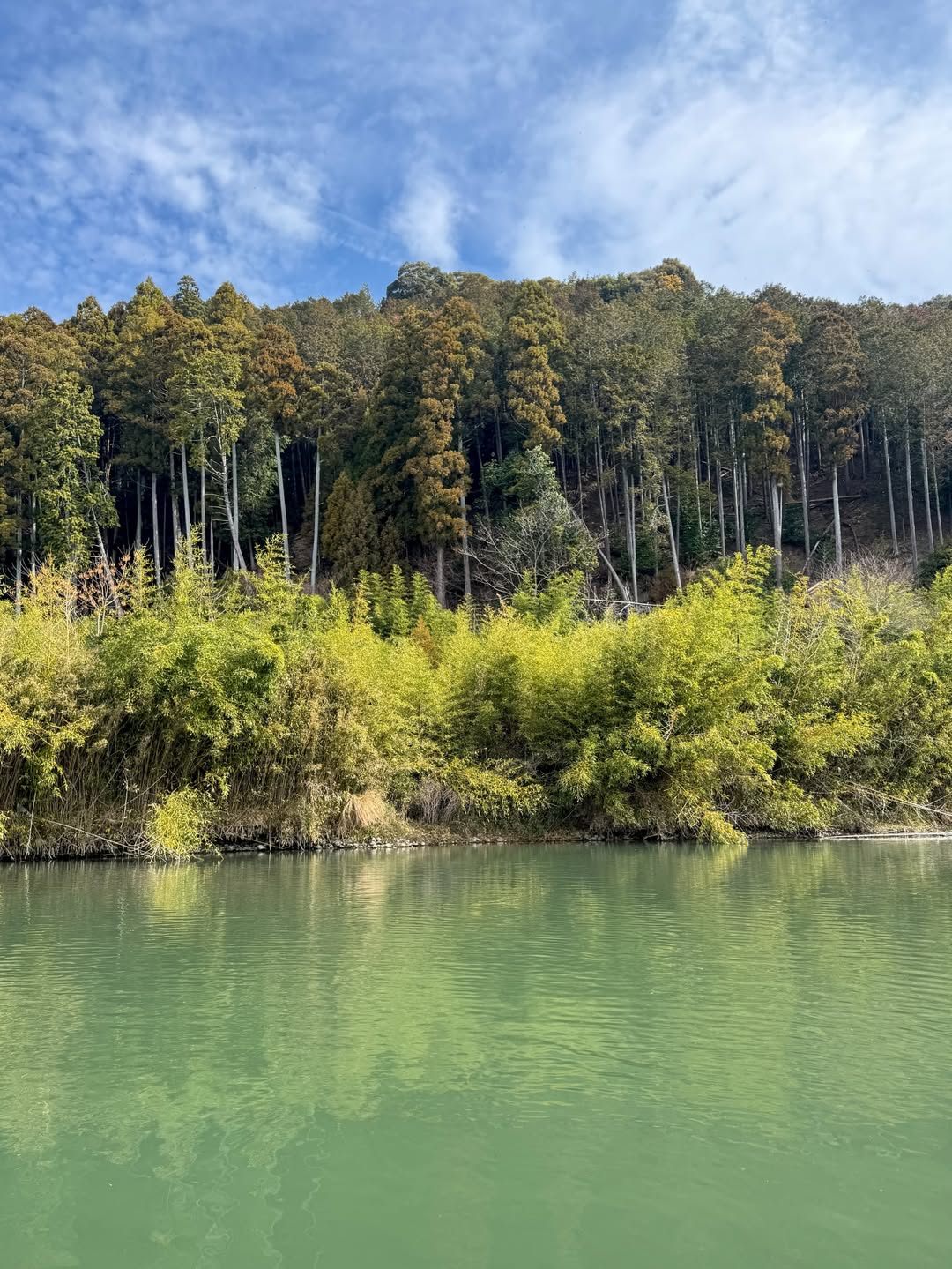
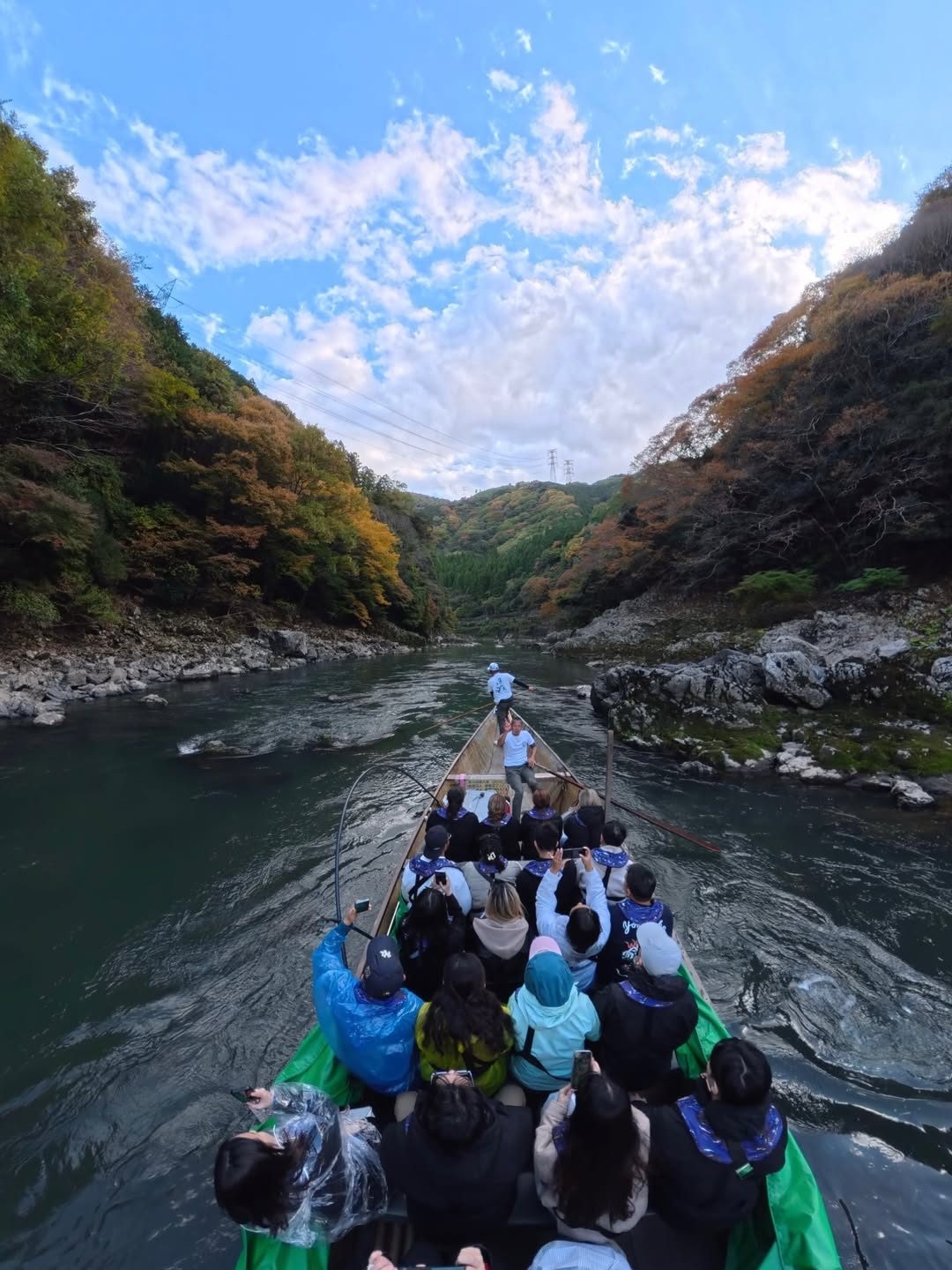
This is the other peak season. From mid-November through early December, the gorge turns into a tunnel of red, orange, and gold — the autumn foliage here is some of the best in the Kyoto area. Temperatures range from 10°C to 20°C and the air is crisp. Weekends in November fill up fast, and walk-in tickets can be hard to get. Book as early as possible and aim for a weekday if you can. The regular schedule runs until December 8, after which the winter timetable kicks in.
Winter (Mid-December – March)
Visitor numbers drop significantly, giving the ride a quieter, more intimate feel. Temperatures can fall to 0°C–10°C, and there are no heating facilities on board — dress warmly in layers, gloves, and a hat. On rare days, snow dusts the gorge walls for a peaceful, almost surreal landscape. The winter schedule runs from 10:00 AM to 2:30 PM with only four departures, but you’re far more likely to get same-day tickets without a wait. The ride is closed from December 29 to January 4.
VISITOR GUIDE: Everything You Need to Know Before You Go
Practical tips, seating advice, and a packing checklist to help you get the most out of your Hozugawa river boat ride experience — no surprises at the dock.
How to Get to the Hozugawa River Boat Ride
The boarding dock is in the town of Kameoka, northwest of central Kyoto. It’s easy to reach by train from Kyoto Station, from Arashiyama, or from Osaka. The dock has 80 free parking spaces if you’re driving. Here’s how to get there depending on your starting point.
Address: Hozugawa Yusen Sightseeing Boat Association 2 Shimo-Nakajima, Hozu-cho, Kameoka, Kyoto 621-0005
From Kyoto Station (most common route)
Take the JR San’in Main Line (Sagano Line) toward Sonobe or Kameoka. Both local and rapid trains stop at JR Kameoka Station. Rapid trains take about 19 minutes, local trains about 28 minutes. The fare is ¥420 one way, or free with a Japan Rail Pass. Trains run roughly every 20 minutes throughout the day.
From JR Kameoka Station, take the North Exit, turn left, and follow the signs for 保津川下り (Hozugawa Kudari). The walk to the boarding dock takes about 8 minutes along a straightforward, well-signposted route.
From Arashiyama (Sagano Romantic Train combo)
This is the most popular route for visitors who want to see the gorge from both perspectives — by train going out, by boat coming back. From JR Saga-Arashiyama Station, walk to the adjacent Torokko Saga Station and board the Sagano Romantic Train to Torokko Kameoka Station (25 minutes, ¥880). You can also buy same-day boat ride tickets at Torokko Saga Station before you board the train.
From Torokko Kameoka Station, you have three options to reach the boat dock:
- Shuttle bus (Keihan Kyoto Kotsu) — about 15 minutes, ¥350 adult / ¥180 child
- Kyobasha horse-drawn carriage — a scenic 30-minute ride, ¥1,500 adult / ¥900 child
- Walk to nearby JR Umahori Station, take one stop to JR Kameoka Station, then walk 8 minutes to the dock
From Osaka
Take the Keihan Kyoto Kotsu direct bus from the east exit of Hankyu Katsura Station to the Hozugawa Kudari boarding site. The ride takes about 40 minutes. Alternatively, travel to Kyoto Station and follow the JR route described above.
By Car
Take the Kyoto-Jukan Expressway — the boarding area is about 20 minutes from the expressway exit. There are 100 free parking spaces at the dock. Keep in mind that the ride is one-way (Kameoka → Arashiyama), so you’ll need to take a train back to Kameoka to collect your car. The return train from JR Saga-Arashiyama to JR Kameoka takes about 10 minutes.
After the Ride — Getting Back
The boat drops you off in Arashiyama, a few hundred metres upstream from the Togetsukyo Bridge. From the landing point, it’s about a 15–20 minute walk to JR Saga-Arashiyama Station, where you can catch trains back to Kyoto Station (about 17 minutes) or continue exploring Arashiyama on foot — the bamboo grove, Tenryuji Temple, and the main shopping street are all within walking distance.
Boarding Address Hozugawa Yusen Sightseeing Boat Association 2 Shimo-Nakajima, Hozu-cho, Kameoka, Kyoto 621-0005
Seating Guide & Boat Layout
Seats are assigned by the boatman — you don’t get to choose. But knowing the layout helps, and the crew sometimes accommodates requests when the boat isn’t full.
The boat has six rows of backless wooden benches, 3–4 people per row, seating 24 total. Three boatmen operate the vessel — one with a bamboo pole at the front, one rowing in the middle, and one steering the rudder at the rear. Plastic splash sheets on both sides can be pulled up during rapids. In winter, benches are removed, passengers sit on the floor, and capacity drops to 16.
Front rows (1–2) — Best for photos and the most immersive feel. You see the gorge open up ahead and feel the rapids first. Also the splashiest spot on the boat.
Middle rows (3–4) — The balanced choice. Good views both sides, less splash, slightly smoother ride. Where most families end up.
Rear rows (5–6) — Driest spot, closest to the rudder boatman’s impressive pole work. Forward view is partially blocked by other passengers, but side views are just as good.
Right side vs. left side — If you can, request the right-hand side (facing forward). Morning sunlight hits the right bank, which attracts more wildlife — herons, turtles, monkeys. The traditional Arashiyama buildings and Daihikaku Senko-ji temple are also visible from the right.
Quick comfort tip: The benches are bare wood with no back support for two hours. A small cushion or folded towel makes a real difference.
What to Bring — Packing Checklist
There’s no shop on the boat and no chance to grab anything once you’ve left the dock. Two hours on open water goes fast, but you’ll be more comfortable if you come prepared.
- Water and snacks — nothing is available until the food boat appears near the end of the ride. Bring enough for two hours.
- Cash — the floating food boat selling dango, amazake, and beer is cash only.
- Sun protection — hat and sunscreen, even in spring and autumn.
- Light jacket or layers — the river breeze is cooler than it feels on land, especially in the morning.
- Raincoat — if the forecast looks iffy. Umbrellas are not allowed on the boat.
- Waterproof phone case or bag — splashing is part of the fun, but your electronics might disagree.
- Small cushion or folded towel — bare wooden benches, no back support, two hours. Your back will thank you.
- Camera with a strap — things get bumpy on the rapids. A wrist or neck strap keeps it safe.
- Use the restroom before boarding — there are none on the boat. Facilities are available in the waiting area at the dock.
What to Do After — Exploring Arashiyama
The boat drops you off just upstream from the Togetsukyo Bridge, right in the heart of Arashiyama. Most people spend the rest of the day here — and there’s plenty to fill it. Here are the top spots, all within walking distance of the landing point.
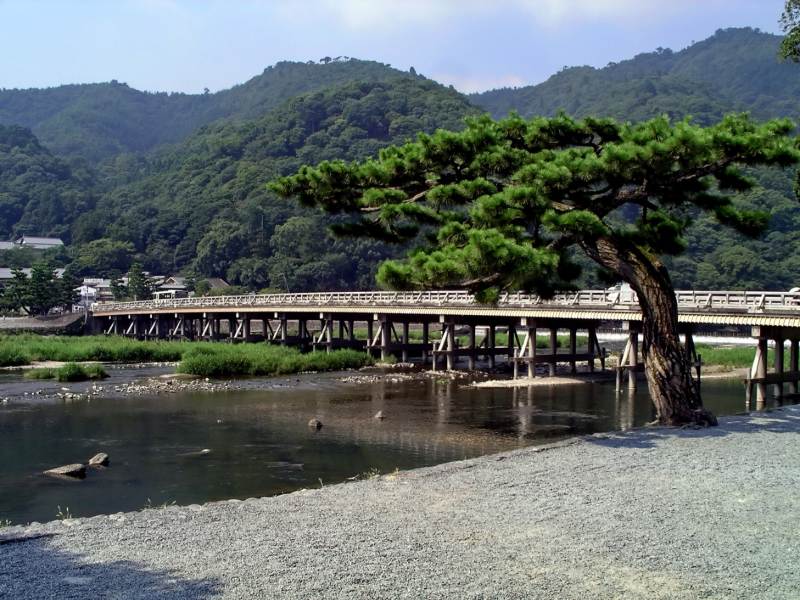
Togetsukyo Bridge
Distance: Steps from the boat landing
Built: Originally in the 9th century, current structure dates to the 1930s
Features: Arashiyama’s most iconic landmark, spanning the Hozu River with forested mountains as a backdrop. Beautiful from every angle, especially in autumn when the surrounding hills are covered in red and gold. A great first stop for photos while you still have the river behind you.
Arashiyama Bamboo Grove
Distance: 10-minute walk from the landing
Entrance: Free
Best time: Early morning for fewer crowds, though arriving from the boat ride mid-morning is still worthwhile
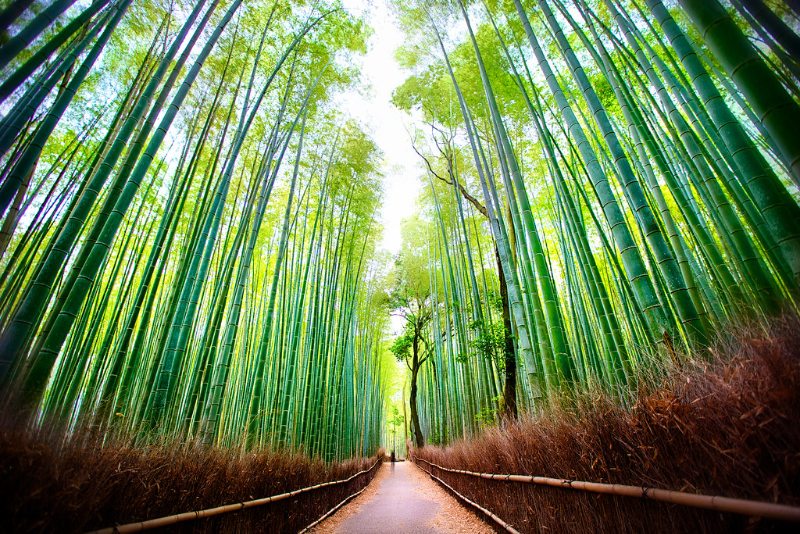
Features: A towering corridor of bamboo stalks that filters the light into something almost otherworldly. The path runs for about 500 metres between Tenryuji Temple and Okochi Sanso Villa. It gets packed by midday — walk it soon after you arrive.
Tenryuji Temple
Distance: 10-minute walk from the landing
Entrance: ¥500 (garden), ¥800 (garden + buildings)
Hours: 8:30 AM – 5:00 PM
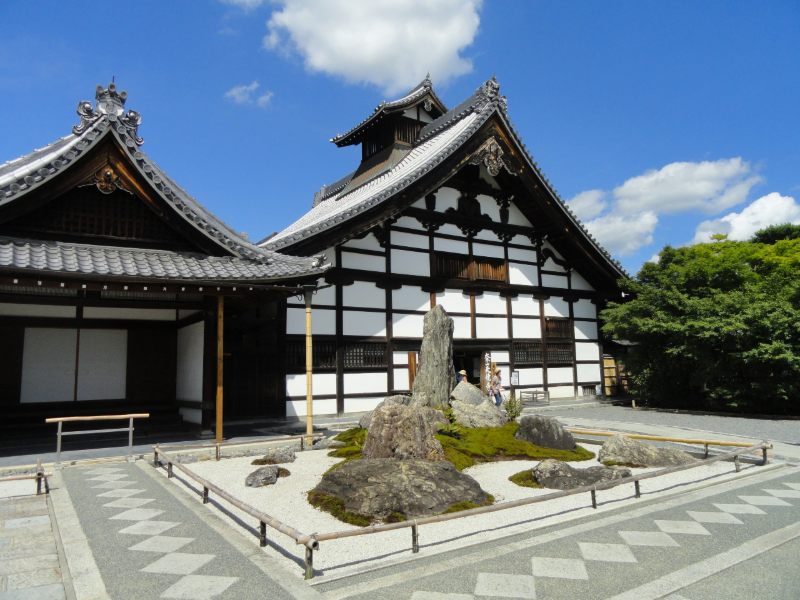
Features: A UNESCO World Heritage Site and the most important temple in Arashiyama. The 14th-century Sogenchi garden, designed by the famous monk Musō Soseki, is built around a central pond with borrowed scenery from the surrounding mountains. The garden’s north exit leads directly into the Bamboo Grove.
Arashiyama Monkey Park Iwatayama
Distance: 5-minute walk from the landing, then a 20-minute uphill hike
Entrance: ¥550 adult / ¥250 child
Hours: 9:00 AM – 4:00 PM (last entry)
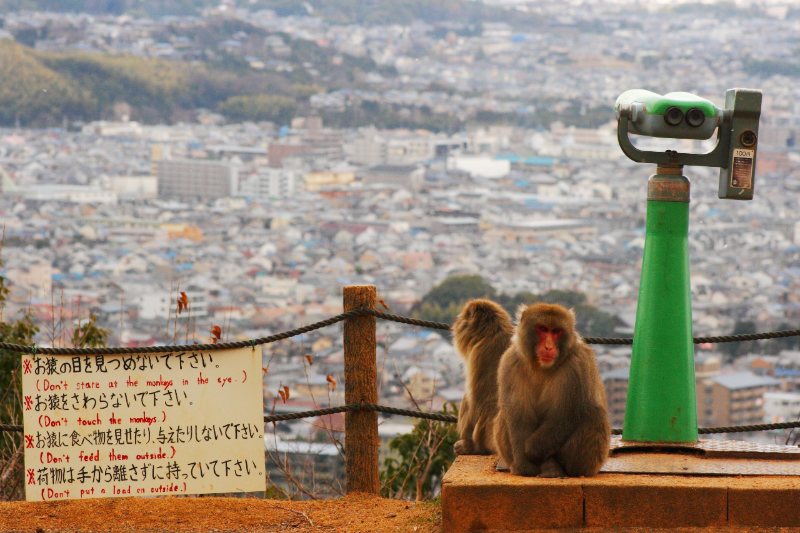
Features: About 120 wild Japanese macaques roam freely on the hilltop. You can feed them from inside a fenced shelter at the summit. The hike up also rewards you with one of the best panoramic views of Kyoto. Not ideal for strollers — the path is steep and unpaved.
Kimono Forest (Randen Arashiyama Station)
Distance: 12-minute walk from the landing
Entrance: Free
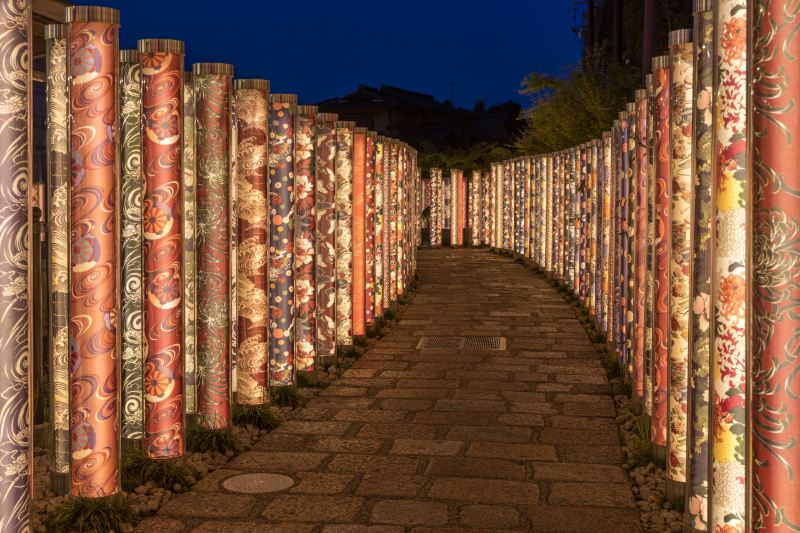
Features: 600 pillars wrapped in colorful kimono fabric lining the platform area of Randen Arashiyama Station. Especially striking after dark when the pillars are illuminated. A quick, photogenic stop on your way to or from the bamboo grove
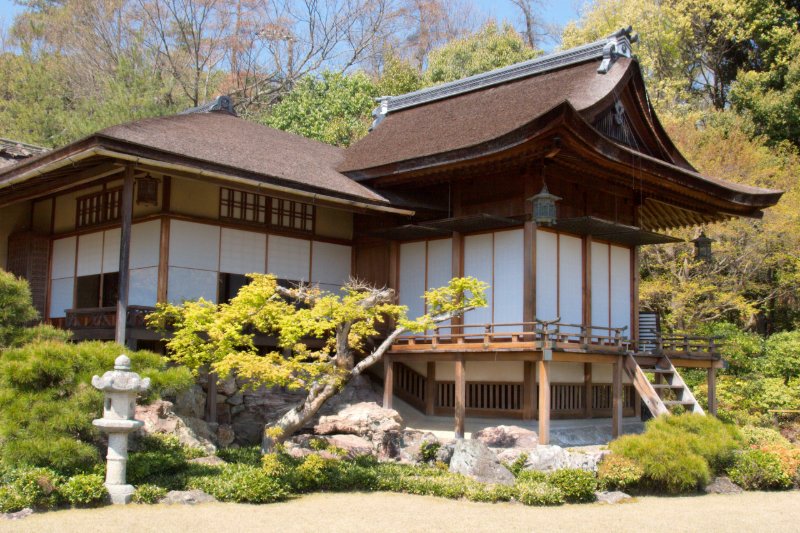
Okochi Sanso Villa
Distance: 15-minute walk from the landing (at the end of the Bamboo Grove)
Entrance: ¥1,000 (includes matcha and a sweet)
Hours: 9:00 AM – 5:00 PM
Features: The former private estate of silent film actor Okochi Denjiro, set across a hillside with manicured gardens and sweeping views of Kyoto. One of the quieter spots in Arashiyama — the included matcha break in the garden tearoom is worth the entry price alone.
History & Cultural Significance of the Hozugawa River
The Hozugawa River has been a working waterway for over 1,200 years — long before Kyoto was even the capital of Japan.
The earliest recorded use dates back to 784 AD, when raftmen floated timber downstream to help build Nagaoka-kyō, the imperial capital at the time. When the capital moved to Heian-kyō (modern Kyoto) ten years later, the river’s importance only grew. For centuries, logs from the heavily forested Tamba highlands were bound into rafts and sent downriver — the wood that built Tenryuji Temple, Osaka Castle, and Fushimi Castle all traveled this route.
The real transformation came in 1606, when a wealthy Kyoto merchant named Suminokura Ryōi invested in a major project to widen and deepen the river channel. Rocks were cleared, dangerous sections were carved out, and for the first time, proper boats could navigate the full route. This opened the river up to transporting not just timber, but rice, wheat, charcoal, firewood, and other goods from the rural Tamba region into the markets of Kyoto and the port of Osaka. Suminokura is still known locally as the “lord of the river.”
The boats went one way — downstream. Getting them back was the hard part. After each delivery, boatmen would haul their empty vessels back upstream on foot, pulling them with hemp ropes along stone pathways called tsuna-michi carved into the riverside cliffs. The return trip took around four hours compared to two going down. This practice continued every day for over 300 years, only ending in 1949. If you look closely at the rocky banks during the ride, you can still spot the old towpath remnants and pole marks worn into the stone by generations of boatmen.
The arrival of the JR San’in Railway in 1899 started the slow decline of river transport. Trains were faster and cheaper. By the end of World War II, commercial shipping on the Hozugawa had ceased entirely. But the gorge was too beautiful to abandon. The boats were repurposed — first for VIP sightseeing trips for foreign dignitaries and politicians, then gradually opened to the public as a tourist attraction. What was once a supply route became one of Kyoto’s most beloved experiences.
Today, the Hozugawa river boat ride draws over 300,000 visitors a year. More than 100 sendo boatmen work the river, and becoming one is no quick career move — it takes roughly ten years of training to be considered fully qualified. Each boatman must master pole handling, oar technique, rudder steering, river reading, weather assessment, and boat repair. They also maintain and preserve the natural environment along the route.
The ride itself hasn’t changed much in principle. The boats are still flat-bottomed wood. The propulsion is still bamboo, muscle, and skill. And the river — winding through the same gorge that carried timber to build a capital — still feels like a journey through a different century.